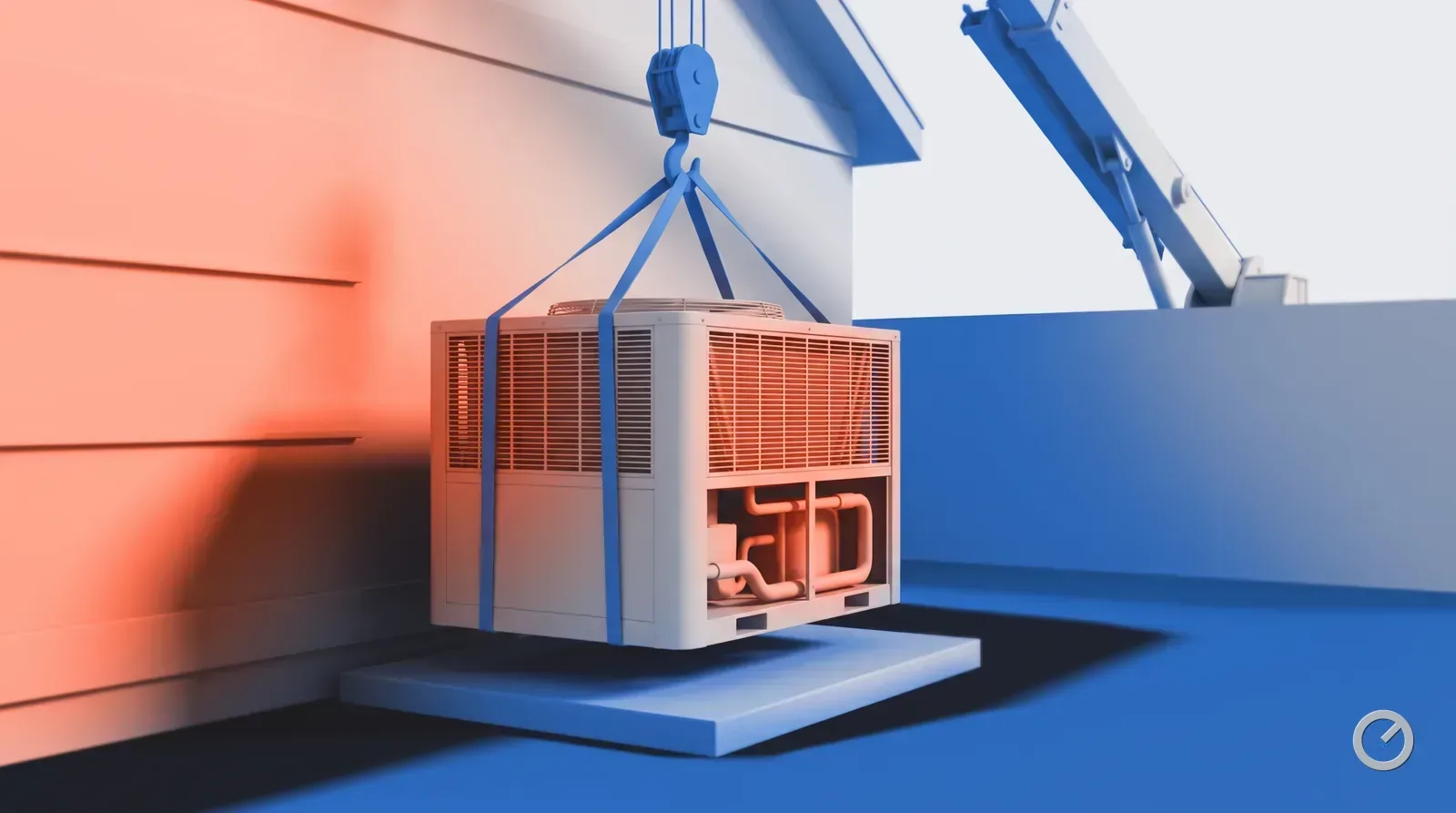
The three parts
| Part | What it does | Scope it drags in |
|---|---|---|
| Condenser | Rejects heat outdoors | Pad or brackets, disconnect, whip, clearances |
| Evaporator coil | Absorbs heat indoors | Plenum transition, condensate drain, sometimes a bigger cabinet |
| Line set | Carries refrigerant between them | Route, insulation, flush or replacement |
| Thermostat | Calls for cooling | May need a C wire for modern equipment |
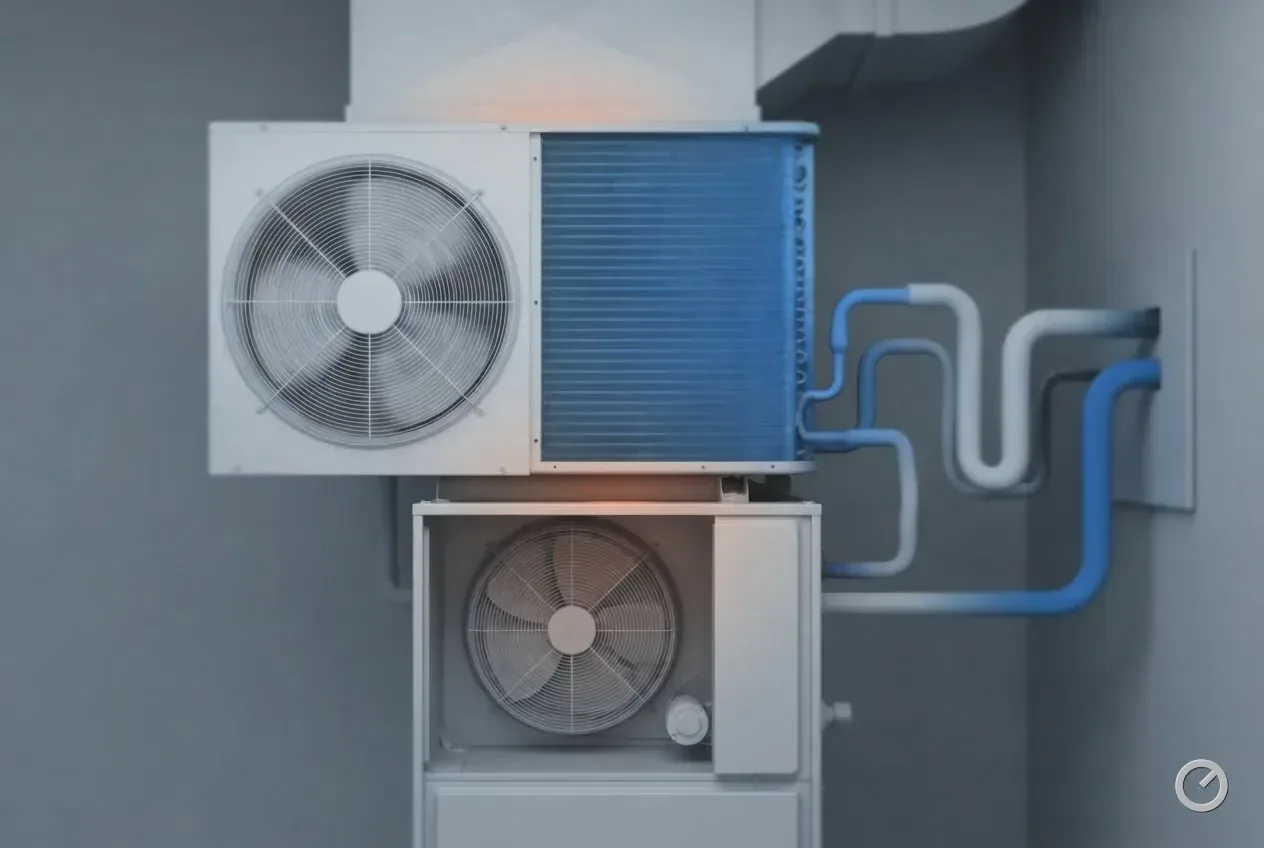
Why coil-only swaps ended
For years the cheap repair on a leaking indoor coil was to replace the coil and keep the condenser. Two things closed that door. Efficiency ratings are certified for a matched pair, so a mismatched combination does not carry a rating and in many jurisdictions cannot legally be installed. And new residential equipment has moved to A2L refrigerants — EPA's Technology Transitions programme sets sector limits on HFC use in air conditioning and heat pumps — so a new A2L coil cannot pair with an old R-410A condenser at all.
Ask what the AHRI reference is
If a quote proposes replacing one half of the system, ask for the AHRI certificate number for the resulting pair. If there is not one, the combination is not certified, and the efficiency claim on the quote is not real.
The line set question
Reusing the existing copper saves real money and is often perfectly legitimate — if it is the right diameter for the new equipment, rated for the new pressures, undamaged, and flushed or otherwise treated per the manufacturer's instructions. Those instructions are binding, and they differ between manufacturers: the top hvac brands do not even share one refrigerant.
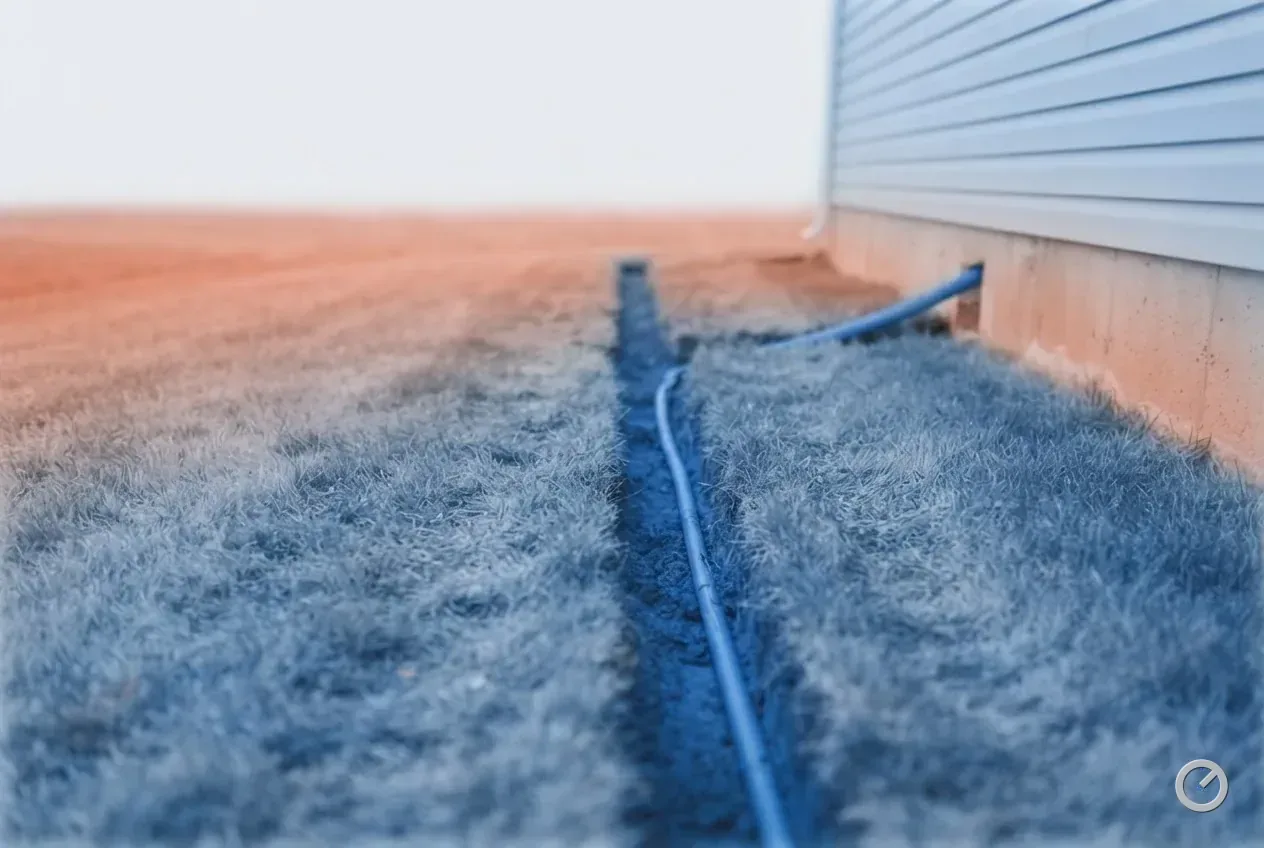
Where reuse goes wrong is a burnt-out compressor. Debris and acid from a failed compressor contaminate the whole circuit; reusing that line set without a proper flush or replacement will kill the new one. If the old compressor failed, budget for new copper.
The regional rule
Air conditioners carry regional efficiency standards that apply at installation, not at manufacture — unlike heat pumps, which are national only. Split systems must meet 13.4 SEER2 nationally; in the Southeast (Alabama, Arkansas, Delaware, Florida, Georgia, Hawaii, Kentucky, Louisiana, Maryland, Mississippi, North Carolina, Oklahoma, Puerto Rico, South Carolina, Tennessee, Texas, Virginia, the District of Columbia and the U.S. Territories) and the Southwest, units under 45,000 BTU/h must meet 14.3 SEER2 and those at or above 45,000 BTU/h 13.8 SEER2.
That matters when someone offers you a bargain on an outdoor unit. If it does not meet the regional standard for your address, it cannot be legally installed there, whatever the price.
Reading the quote
- Both model numbers and the AHRI reference for the matched pair.
- Whether the line set is reused, flushed, or replaced — and why.
- The condensate route, with a secondary pan or float switch above finished space.
- Electrical: disconnect, whip and breaker sized for the new unit.
- Refrigerant type, and confirmation the indoor equipment is the matching generation.
- The load calculation behind the tonnage.
Build the number yourself in the replacement cost calculator and compare line by line rather than total to total.
Sources: 10 CFR 430.32(c)(6)(i)(A) (read 2026-09-04) · US EPA, Technology Transitions (page last updated 2025-12-03) (read 2026-09-04)