What changed
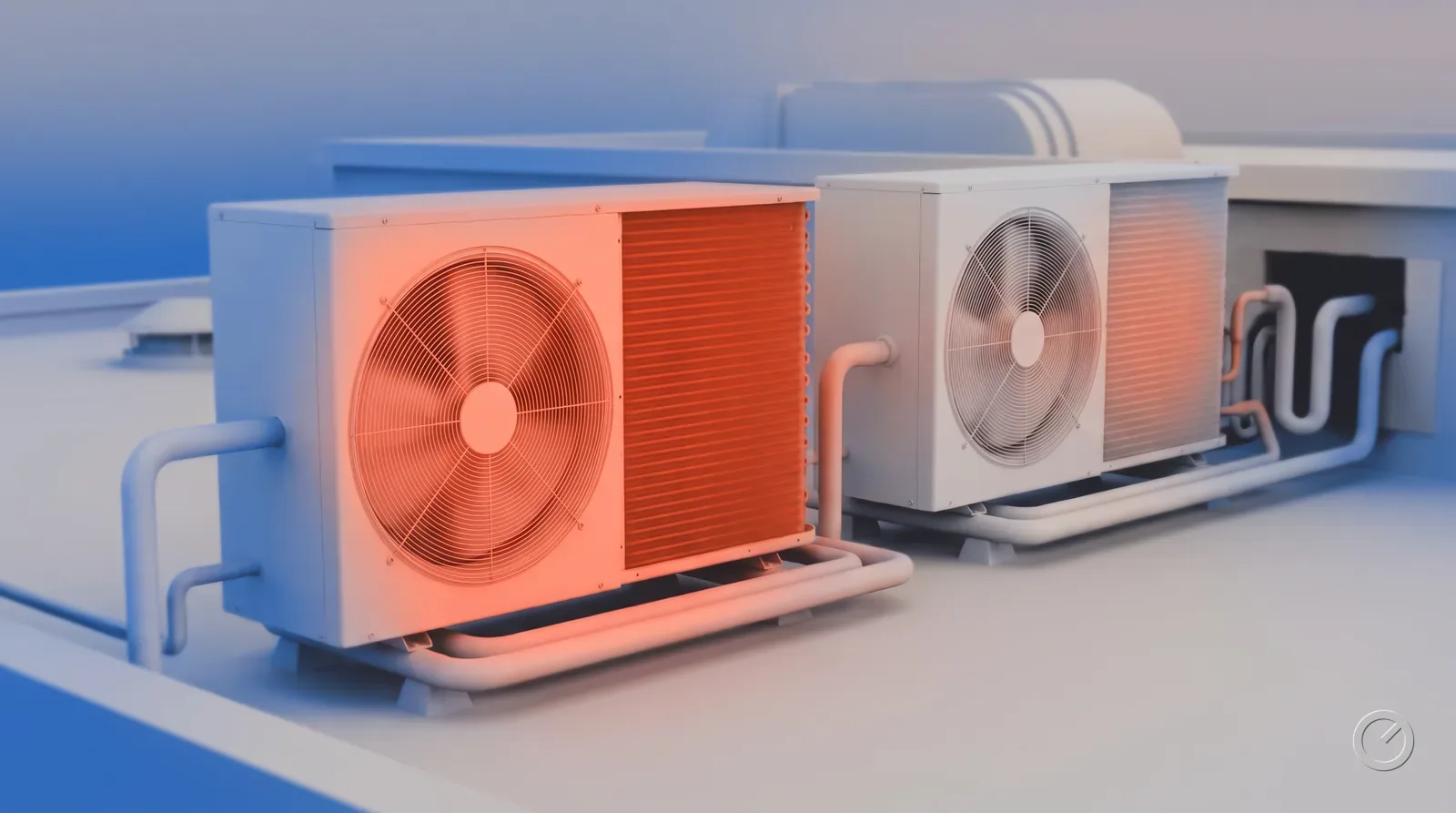
Both SEER and SEER2 are BTU of cooling per watt-hour of electricity, averaged over a cooling season. The difference is the test bench. The old procedure ran the equipment against 0.1 inches of water column of external static pressure — a duct system that barely exists outside a laboratory. The M1 procedure that produced SEER2 runs at 0.5 in. w.c., which is what a residential blower is actually rated against.
Making the blower work harder lowers the measured efficiency. Nothing about the machines changed; the yardstick got honest.
Converting SEER to SEER2
For split-system air conditioners the conversion is roughly a 4.5% reduction. Heat pump heating ratings fell further — around 15% from HSPF to HSPF2 — because the heating test changed more.
| Old rating | Approximate SEER2 | Note |
|---|---|---|
| 13 SEER | 12.4 SEER2 | Below today's national minimum |
| 14 SEER | 13.4 SEER2 | Exactly the national minimum |
| 15 SEER | 14.3 SEER2 | The Southeast and Southwest minimum |
| 16 SEER | 15.2 SEER2 | The common mid-tier |
| 18 SEER | 17.2 SEER2 | Two-stage or inverter territory |
| 20 SEER | 19.1 SEER2 | Variable capacity |
Screening conversion at ≈4.5%. A specific model's certified SEER2 is on its AHRI certificate and may differ.
The minimums
Central air conditioners and central air conditioning heat pumps manufactured on or after January 1, 2023 must meet these floors: split-system air conditioners 13.4 SEER2; split-system heat pumps 14.3 SEER2 and 7.5 HSPF2; single-package air conditioners 13.4 SEER2; single-package heat pumps 13.4 SEER2 and 6.7 HSPF2.
The regional rules
Air conditioners — not heat pumps — carry regional standards on top of the national ones, and they apply at installation, not manufacture. In the Southeast (Alabama, Arkansas, Delaware, Florida, Georgia, Hawaii, Kentucky, Louisiana, Maryland, Mississippi, North Carolina, Oklahoma, Puerto Rico, South Carolina, Tennessee, Texas, Virginia, the District of Columbia and the U.S. Territories) and the Southwest (Arizona, California, Nevada and New Mexico), split systems under 45,000 BTU/h must meet 14.3 SEER2 and those at or above 45,000 BTU/h 13.8 SEER2.
The Southwest also has an EER2 floor
Southwest installations add a peak-efficiency requirement measured at 95 °F: for split systems, 11.7 EER2 under 45,000 BTU/h (11.2 at or above it) when certified below 15.2 SEER2, or 9.8 EER2 at or above 15.2 SEER2. That is the desert recognising that a seasonal average flatters equipment which sags in the afternoon.
What a rating point is worth
Energy scales inversely with the rating, so the savings curve flattens quickly. Going from the 13.4 minimum to 16 SEER2 cuts cooling energy about 16%. Going from 16 to 20 cuts a further 20% — but of a smaller number, and usually for a larger upcharge.
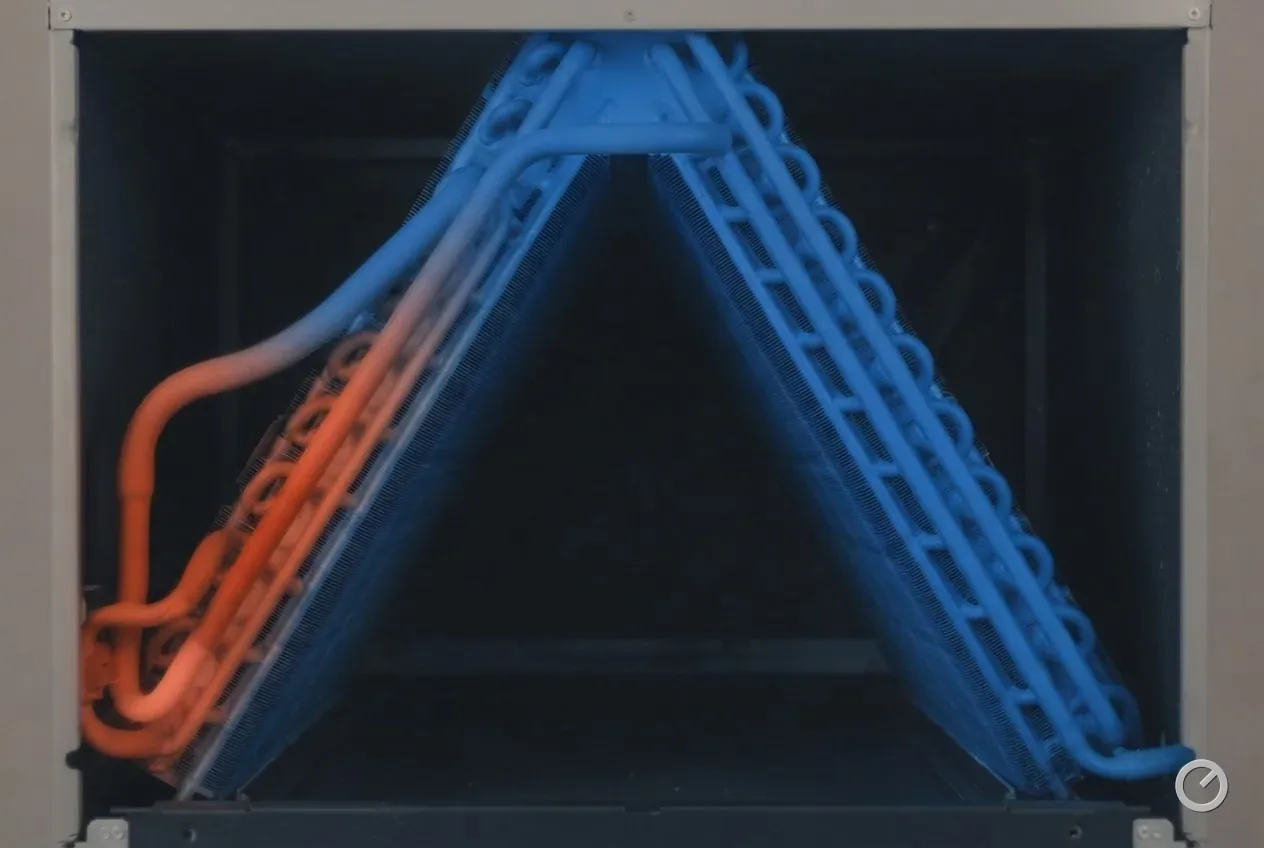
Put your own run hours and power price into the SEER2 savings calculator. In Phoenix a high-efficiency upgrade pays back in years; in Seattle it may never. And a high rating only materialises if the duct system can deliver rated airflow — which is exactly what the new test procedure was trying to make people notice.
Sources: 10 CFR 430.32(c)(5)(ii) (read 2026-09-04)