Two-stage
Typical low-stage output
Long, quiet runs; smaller swings
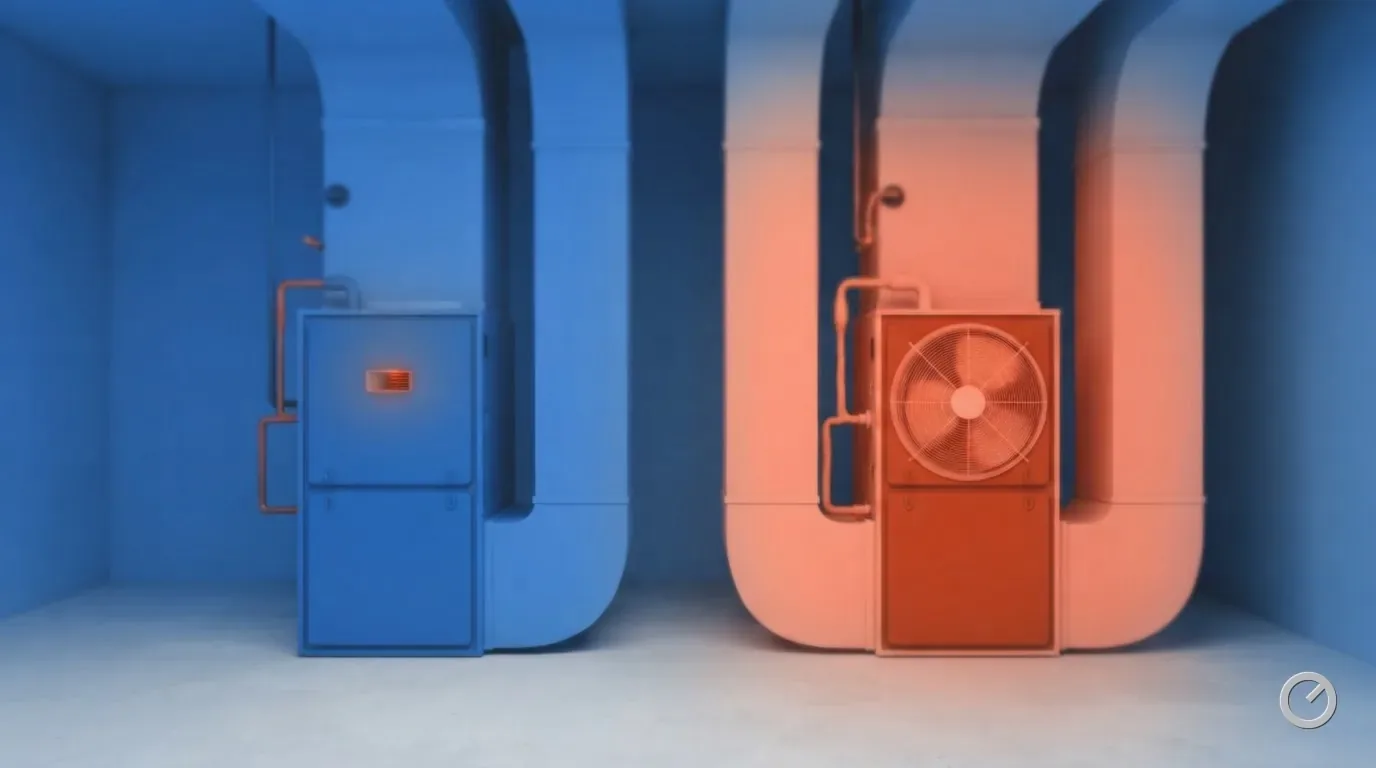
A single-stage furnace has one answer to every winter day: full output. A two-stage one spends most of the season at about 65% and only calls on the rest when it is genuinely cold. The efficiency difference is small; the comfort difference is not.
Updated 2026-09-04
Our pick — two-stage in any climate with a real winter; single-stage where the furnace runs a few hundred hours a year
Typical low-stage output
Long, quiet runs; smaller swings
Only available output
Short runs; larger swings
Design conditions happen a handful of days a year. The rest of the winter, a furnace sized for design is oversized for the weather — so a single-stage unit satisfies the thermostat quickly, shuts off, and lets the house drift until it calls again. That is the cycle people feel as draughty and uneven.
A two-stage furnace runs its first stage at roughly two-thirds output. It takes longer to satisfy, which is the point: longer runs mean more air circulated, more filtration passes, smaller temperature swings and far fewer starts.
| Factor | Two-stage | Single-stage |
|---|---|---|
| Output levels | ≈ 65% and 100% | 100% only |
| Typical run length | 15–30 minutes | 5–12 minutes |
| Room-to-room swing | Smaller — air keeps moving | Larger, especially in far rooms |
| Noise | Quiet on low fire; a step at changeover | One volume, from cold start |
| Blower | Usually ECM — fewer watts over a long season | Often PSC |
| Filtration passes | More, because the fan runs longer | Fewer |
| Controls | Two-stage thermostat or communicating | Any thermostat |
| Failure surface | More electronics and a two-stage valve | Fewer parts to fail |
Two-stage is not a fix for oversizing
A furnace two sizes too big still short-cycles on low fire. Staging narrows the gap between output and load; it does not close it. Size the furnace correctly first with the furnace size calculator, then decide about stages.
Nor is it primarily an efficiency upgrade. AFUE on a two-stage furnace is usually a point or two above its single-stage sibling — real, but small next to the difference between 80% and a condensing unit. Most of the electricity saving comes from the ECM blower, not the burner.
Sources: 10 CFR 430.32(e)(1)(ii)(A) (read 2026-09-04)
Input BTU/h and output capacity from load, climate zone and AFUE.
BTU/h · AFUE
From heating load to nameplate input, with the derating steps for altitude.
9 min
What annual fuel utilization efficiency measures, and the federal minimums.
8 min
Capacity at design temperature, balance point and the supplemental-heat gap.
BTU/h · balance point
More head-to-heads in the HVAC equipment comparisons index.