The decision list
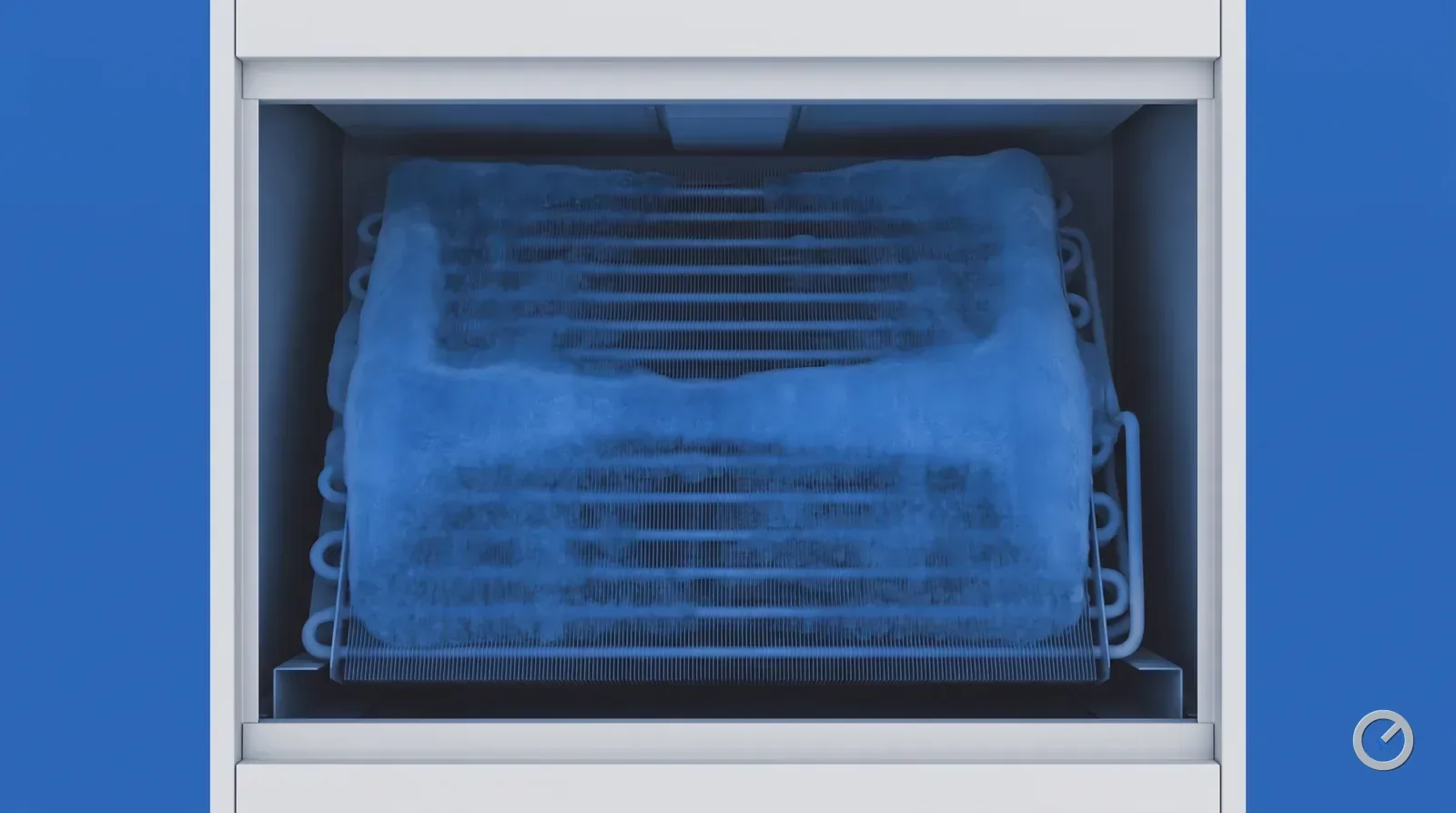
The frozen coil
Ice on the indoor coil or the copper suction line has exactly two causes: not enough air over the coil, or not enough refrigerant in it. Both drop the coil temperature below freezing; the condensate then freezes instead of draining, and the ice blocks what airflow was left. It is a runaway.
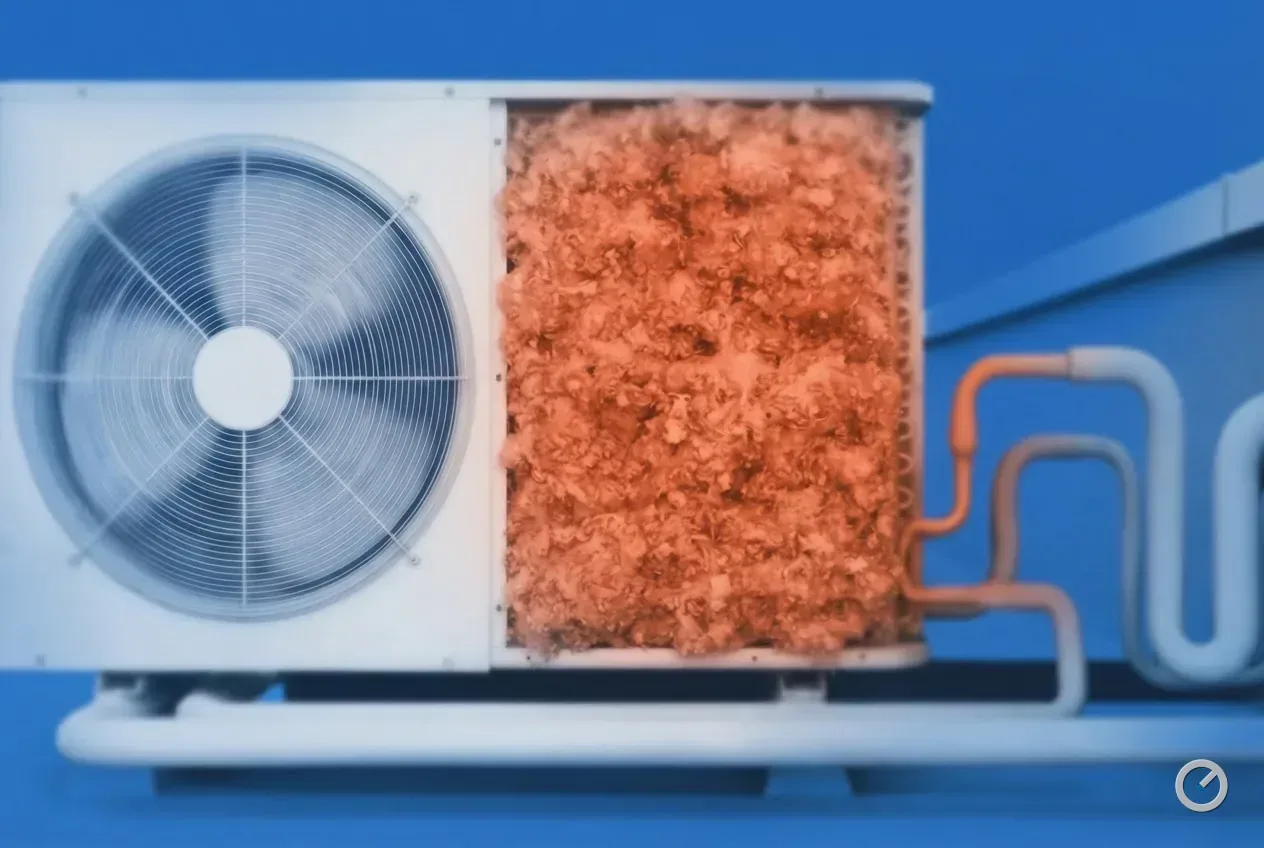
Thaw it first — cooling off, fan on, four to twenty-four hours. Then decide which cause it was. If the filter was filthy or the static pressure is high, it was airflow. If airflow is fine and it freezes again within a day, it is charge or a restriction, and that needs gauges.
Do not chip the ice
The fins are aluminium a fraction of a millimetre thick and the tubes behind them carry refrigerant under pressure. A screwdriver through a tube turns a service call into a coil replacement.
The silent compressor
The outdoor fan spins but the compressor does not, or nothing runs at all. Three usual suspects, in order of likelihood: a failed run capacitor, a pitted contactor that will not pull in, or a compressor that has gone to ground.
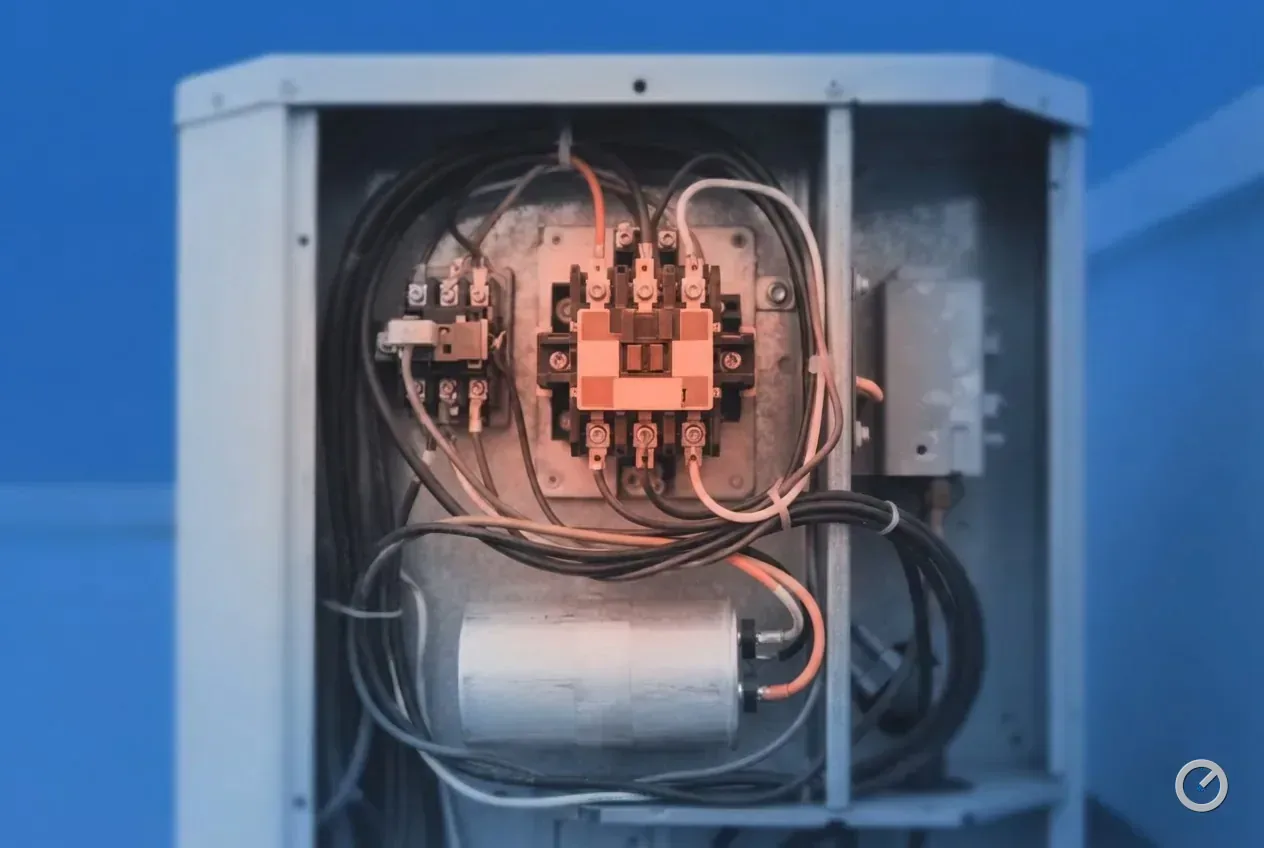
A capacitor that reads more than about 6% below its rated microfarads is failing even if the unit still starts. It is the least expensive part in the cabinet and the one most likely to be the whole problem.
Safety — Capacitors hold a charge
A run capacitor stores enough energy to injure you after the power is off. Discharge it through a resistor, never by shorting the terminals with a screwdriver, and only if you know how.
When to stop and call
At step 7, or any time the answer involves refrigerant. Section 608 of the Clean Air Act (40 CFR part 82, subpart F) bans intentional venting of ODS refrigerants and their substitutes, including HFCs, during service, repair or disposal — opening a sealed system without that certification is not a technicality, and a system that has lost charge has a leak that will do it again if nobody finds it.
Before the technician arrives, take the static pressure reading and the temperature split. Handing those over saves the first twenty minutes of the visit and makes it much harder for "it just needs a top-up" to be the diagnosis three summers running.
Sources: US EPA, Stationary Refrigeration and Air Conditioning (read 2026-09-04)