Window AC size calculator
CoolingRoom air conditioner BTU/h from the ENERGY STAR chart, with sun, shade and kitchen adjustments.
BTU/h · room
Square feet per ton, corrected for climate zone, vintage, shading and storey count — then a second mode that grades the unit you already have against the number.
What to show: Size a new unit
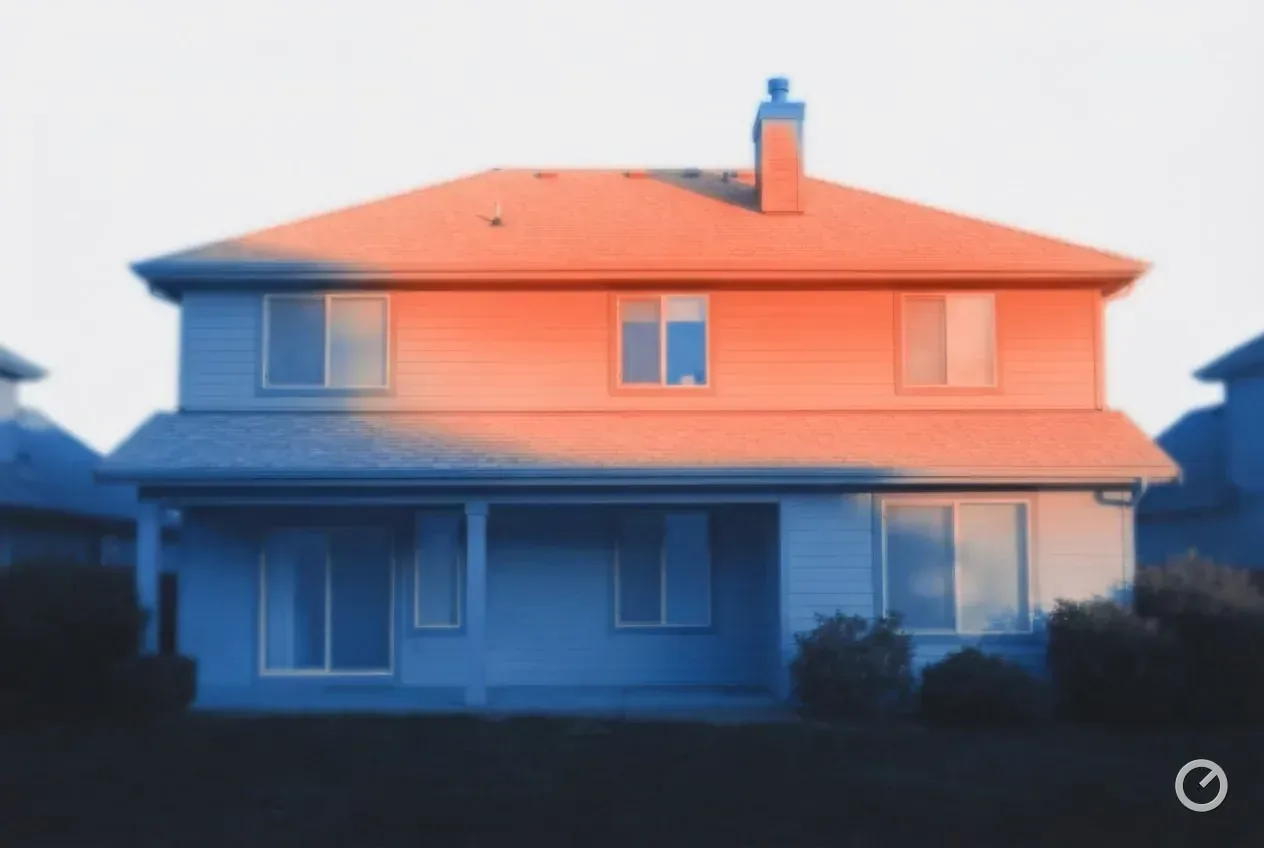
Pre-filled with a 2,000 ft² single-storey house from the 1990s in zone 4.
Nominal capacity
A ton of cooling is 12,000 BTU/h. "Square feet per ton" is the inverse of the load intensity the BTU calculator produces: 500 ft²/ton is the same thing as 24 BTU/h per square foot. Contractors carry the number in their heads because it is quick, and it is wrong exactly as often as the house differs from the average house the number came from.
That is why the tool moves the figure by vintage. A 2018 house with a sealed envelope and low-E glass can hold 575 ft² per ton in zone 4; the same footprint from 1968 with single panes and a 4-inch attic will struggle past 400.
The calculator starts from the square-feet-per-ton band for the climate zone you pick — 375 in zone 1 rising to 665 in zone 7 — then applies the vintage correction above. The full band table, a tons-by-house-size grid and the four house types where the rule breaks outright live in the HVAC tonnage per square foot guide; this page is for running the numbers on one house.
Switch the control to "check what's installed", put in the nameplate tonnage, and the tool prints the gap. Under about 15% over, you are inside the noise of a screening estimate. Past 25%, the symptoms are usually already there: short cycles, a house that reaches temperature but feels damp, and a compressor that has never run a full hour.
Where to find the nameplate tonnage
On most condensers the model number carries the capacity in thousands of BTU/h — a "042" or "48" buried in the string means 42,000 or 48,000 BTU/h, that is 3.5 or 4.0 tons. If the label is unreadable, the breaker size and line-set diameter narrow it down but do not settle it.
Sizing decides the capacity; the federal standard decides the minimum efficiency you may buy. Split-system air conditioners must meet 13.4 SEER2 nationally. In the Southeast — Alabama, Arkansas, Delaware, Florida, Georgia, Hawaii, Kentucky, Louisiana, Maryland, Mississippi, North Carolina, Oklahoma, Puerto Rico, South Carolina, Tennessee, Texas, Virginia, the District of Columbia and the U.S. Territories — and in the Southwest (Arizona, California, Nevada and New Mexico), units under 45,000 BTU/h must meet 14.3 SEER2 and units at or above 45,000 BTU/h 13.8 SEER2. Southwest installs carry an EER2 floor as well.
A dealer who cannot say which of those applies to your address is not the dealer to size your system. The SEER2 guide walks through the difference between the ratings and what changed in 2023.
Sources: 10 CFR 430.32(c)(6)(i)(A) (read 2026-09-04)
Room air conditioner BTU/h from the ENERGY STAR chart, with sun, shade and kitchen adjustments.
BTU/h · room
Pints per day by room size and dampness, and old ratings converted to the 2019 test.
pints/day
Why square-foot rules of thumb oversize, and what to measure instead.
9 min
The per-zone square-feet-per-ton bands, and where they break down.
8 min
More in Sizing & Load — 8 tools, 4 guides, on SetpointKit. Or browse every HVAC calculator.