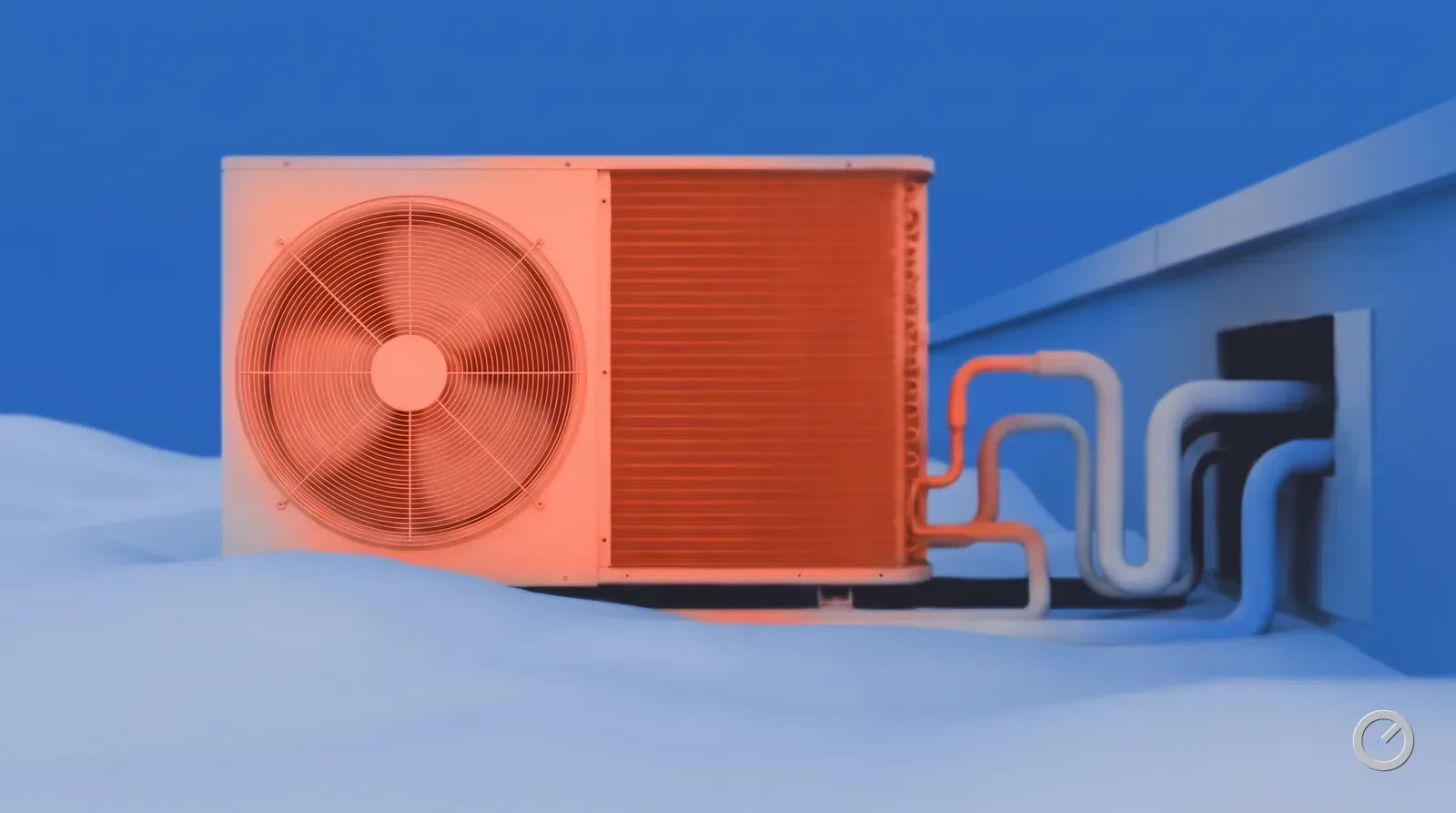
Why cold is not the problem
A heat pump does not create heat; it moves it. There is heat in outdoor air at 5 °F — the absolute zero of the scale is about 465 degrees further down. What changes as it gets colder is how much heat the refrigerant can pick up per pass, so capacity falls and the compressor has to work harder for each BTU.
The engineering problem is that the house wants more heat at exactly the moment the machine can deliver less. Everything else in this guide is about that crossing.
The capacity curve
AHRI publishes heating capacity at 47 °F and 17 °F; cold-climate units publish 5 °F as well. A conventional single-stage 3-ton heat pump might read 36,000 BTU/h at 47 °F and 24,000 at 17 °F — a third of its capacity gone. A modern inverter-driven cold-climate unit of the same nominal size can hold 34,000 at 17 °F and 28,000 at 5 °F.
| Outdoor | Conventional | Cold-climate inverter |
|---|---|---|
| 47 °F | 36,000 BTU/h | 36,000 BTU/h |
| 35 °F | 31,200 BTU/h | 35,200 BTU/h |
| 17 °F | 24,000 BTU/h | 34,000 BTU/h |
| 5 °F | not published | 28,000 BTU/h |
| −5 °F | not published | 22,000 BTU/h |
Illustrative shapes, not a product claim. Take the two or three published points for the exact pair being quoted and put them in the sizing tool.
The balance point
Where the falling capacity curve crosses the rising load line. Above it the heat pump carries the house alone. Below it, something else makes up the difference. A conventional heat pump sized to the cooling load in zone 5 typically balances around 30 to 35 °F, which in Chicago means supplemental heat for a large share of the season. A cold-climate unit sized to the heating load can balance below 10 °F.
The heat pump sizing calculator finds the crossing from your load and the two rating points, and prints the shortfall at design in both BTU/h and kilowatts.
Strip heat against dual fuel
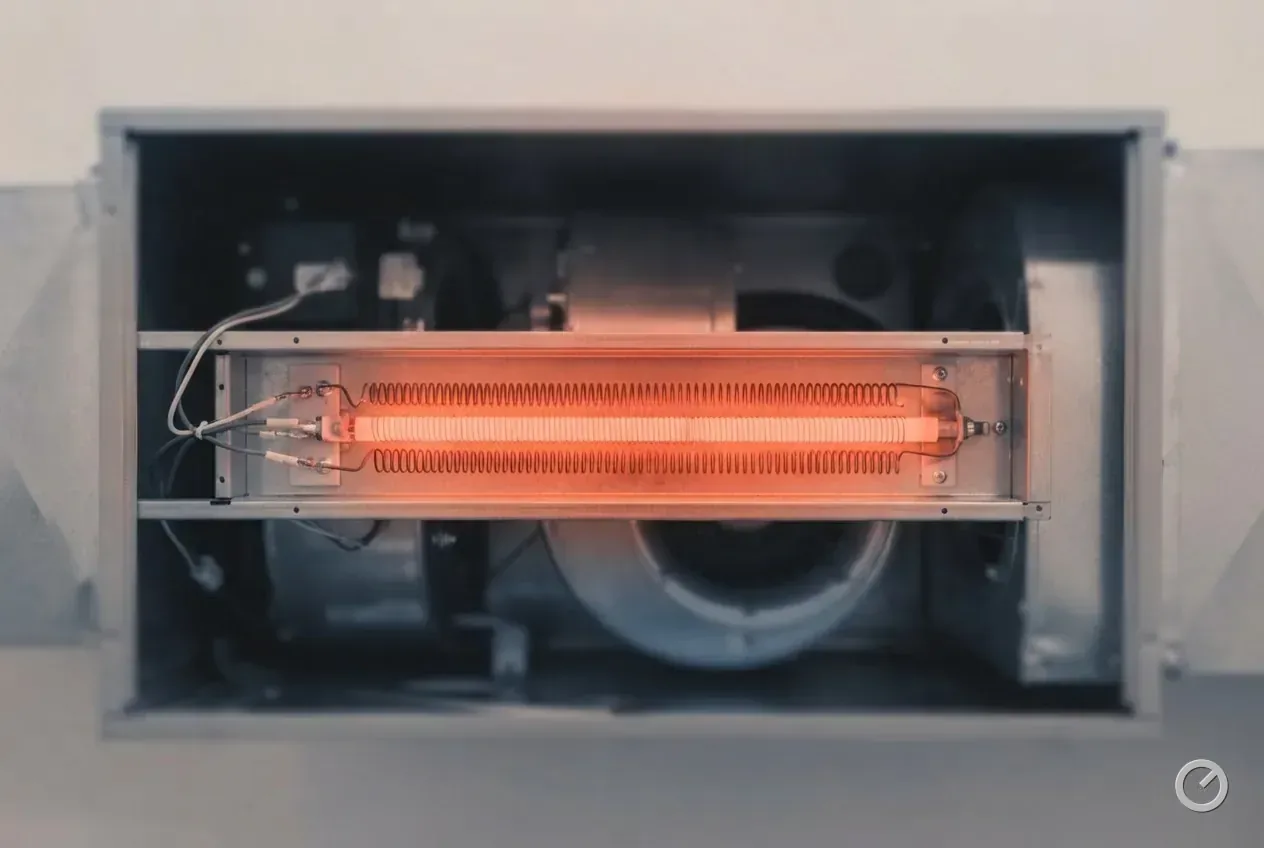
Electric resistance strips are the default supplement. They are cheap to install, need no maintenance and are perfectly efficient at the appliance — and they cost roughly three times as much per delivered BTU as the heat pump above them, because a heat pump at a COP of 3 gives you three BTU per unit of electricity where a strip gives one. A kilowatt-hour is 3,412 BTU either way.
Dual fuel puts a gas furnace under the heat pump instead, with the thermostat switching at the balance point. It costs more to install, keeps the gas meter, and is usually the cheaper way to run in a cold climate where gas is available. It also avoids the electrical service upgrade that a 10 kW strip package often forces.
Watch the electrical service
A 30,000 BTU/h supplemental gap is about 9 kW — roughly 37 amps at 240 V. On a 100-amp service already carrying a range and a dryer, that is a panel conversation before it is a heating conversation. Get it priced before the equipment is ordered.
Defrost is not a fault
Below about 40 °F with humidity in the air, frost forms on the outdoor coil because the coil is below both the dew point and freezing. The unit periodically reverses into cooling mode to melt it, which is why an outdoor unit steams and the indoor air goes briefly cool. It is designed behaviour.
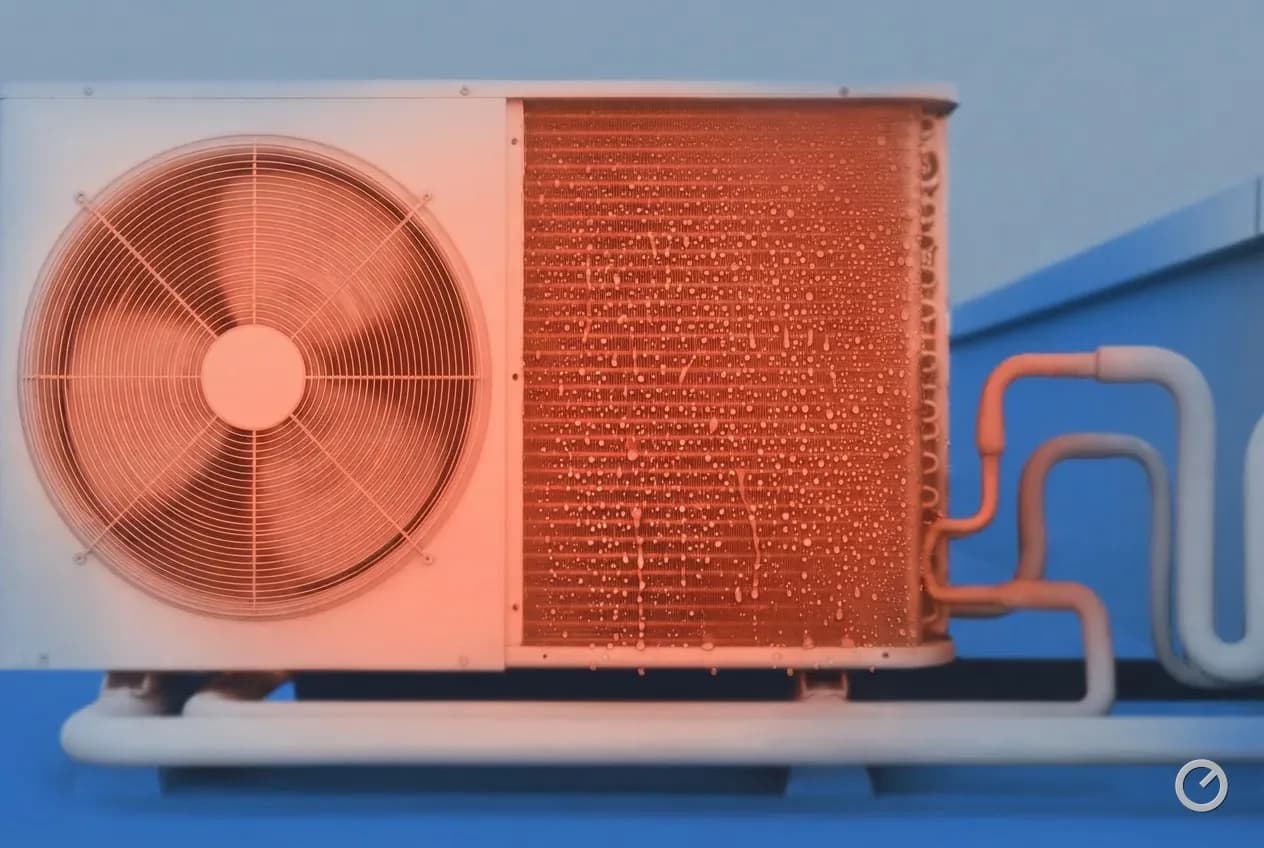
What is not designed behaviour: a unit sitting in a block of ice, defrosting every ten minutes, or never defrosting at all. The first two usually mean a drainage problem under the unit or a failed defrost sensor.
What to check on a quote
- Published capacity at 17 °F and, if it exists, at 5 °F — for the exact matched pair.
- The calculated balance point, and what covers the load below it.
- Supplemental heat in kW and the resulting electrical load.
- Whether the unit is variable-capacity; single-stage in a cold climate means compromise.
- Defrost strategy — demand-defrost rather than a fixed timer.
The federal minimums are 14.3 SEER2 and 7.5 HSPF2 for split systems; cold-climate equipment sits well above both, and HSPF2 alone will not tell you what happens at 5 °F. Ask for the capacity table.
Sources: 10 CFR 430.32(c)(5)(ii) (read 2026-09-04) · EIA Electric Power Monthly, Table 5.6.A (released 2026-09-24) (read 2026-10-18)