What it is
A blower is rated to deliver a certain airflow against a certain resistance. That resistance is external static pressure — external because it excludes the blower's own cabinet, and static because it is the pressure pushing outward on the duct walls rather than the velocity pressure of the moving air.
Total external static pressure is the sum of what the blower pushes against on the supply side and what it pulls against on the return side. Most residential air handlers are rated at 0.5 inches of water column. Field surveys routinely find systems running at 0.8 to 1.0.
How to measure it
A digital manometer, two static pressure tips, a drill and a 3/8-inch bit. Kill power at the disconnect. Drill one port in the supply plenum downstream of the coil, one in the return upstream of the filter. Restore power, run the blower on the highest speed it will be asked to deliver, and read both.
Supply reads positive, return negative. Add the absolute values. The static pressure calculator does the sum and compares it to the rating.
Safety — Where not to drill
Never into a flue passage, a sealed combustion chamber, a refrigerant line or the electrical compartment. On a furnace, drill above the heat exchanger on the supply side and stay clear of the vent connector. Plug the ports afterwards.
What a high reading costs
Airflow, and airflow is capacity. A PSC blower on a system at 0.9 in. w.c. is typically moving a quarter less air than it would at 0.5. Cooling capacity falls with it, the coil runs colder and eventually ices, and the system that was sized correctly now behaves like one that was undersized.
| TESP | Airflow delivered | Effect |
|---|---|---|
| 0.30 in. w.c. | ≈ 110% | Over-airflow; poor dehumidification |
| 0.50 in. w.c. | 100% | As rated |
| 0.70 in. w.c. | ≈ 88% | Capacity down, coil colder |
| 0.90 in. w.c. | ≈ 75% | Freeze risk in cooling, limit trips in heating |
| 1.10 in. w.c. | ≈ 62% | System is functionally undersized |
Indicative values from typical PSC blower curves; ECM blowers hold airflow further but pay for it in watts. Read your own blower table.
Five usual causes
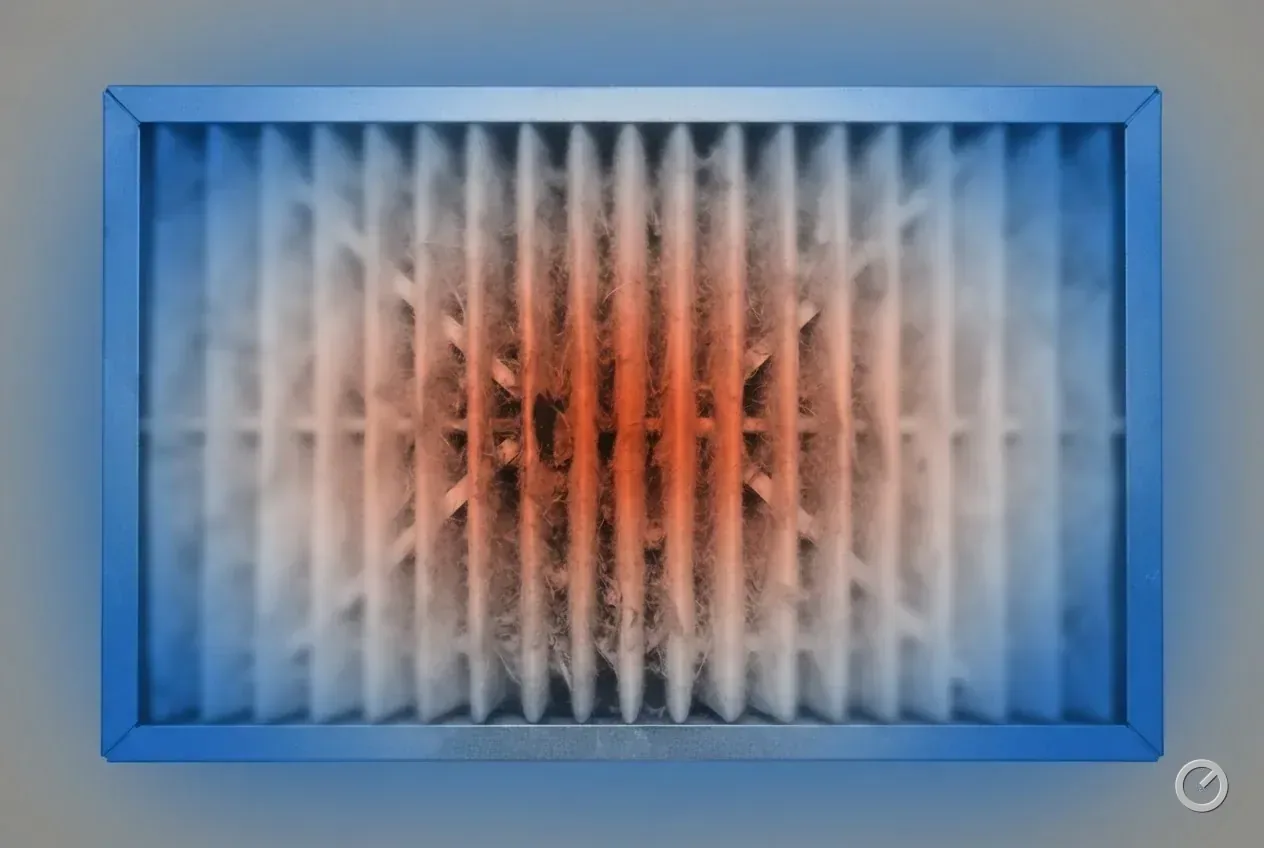
- A one-inch filter in a slot sized for fibreglass. High MERV, small face area, and it loads fast. This is the single most common cause.
- An undersized return. One central return grille on a system that needs two, or a return duct a size smaller than the supply trunk.
- A dirty evaporator coil. Invisible without pulling a panel, and it grows slowly enough that nobody notices the change.
- Flex duct that was never stretched. Compressed flex can cost several times what the same length of stretched flex does.
- A coil bigger than the cabinet it sits on. A four-ton coil dropped onto a three-ton furnace has a transition that pinches.
Fixing it in the right order
Cheapest first. Change the filter and re-measure; if the reading drops half a tenth, the filter regime is the problem and a four-inch media cabinet is the fix. Then clean the coil. Then look at the return: adding a second return grille is usually a day of work and buys more than anything else on the list.
What not to do: turn the blower up to hide it. A higher speed against the same restriction moves a little more air, uses considerably more power and makes the system louder. And do not drop the filter rating to buy static — EPA's guidance is MERV 13 or as high as the fan and slot allow, and the way to honour both halves is more media area, not less filtration.
Sources: US EPA, Indoor Air Quality — What is a MERV rating? (read 2026-09-04)