Skip to content

Furnace troubleshooting

Updated 2026-09-04 · 11 min read

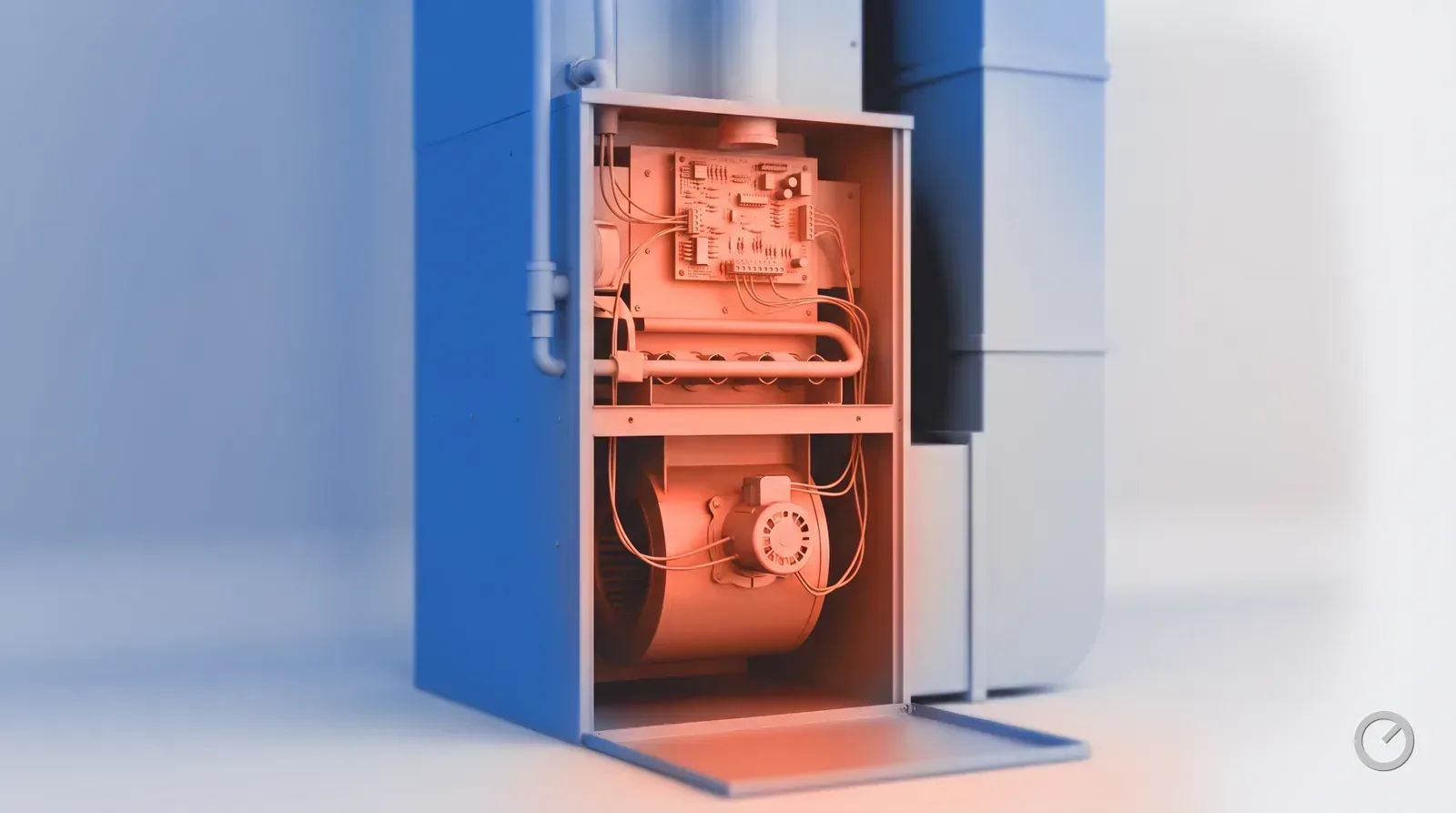
Thermal-toned furnace with the blower door off
Blower door off: most of these answers are behind this panel.

Work down the list in order. Each step is a question with two answers, and the answer tells you where to go next. Stop at any step that involves gas, combustion or a cracked heat exchanger and call someone licensed.

Stop here first

SafetyThree conditions that end the troubleshooting

A carbon monoxide alarm sounding, a smell of gas, or soot and scorch marks around the burner compartment. Any of the three: shut the gas off at the valve if you can do it safely, leave, and call the gas utility from outside. A cracked heat exchanger is not a repair you diagnose from a web page.

Everything below assumes a furnace that is failing to run or running badly, with no combustion smell and a working CO alarm.

The decision list

  1. Step 01

    Does the thermostat call for heat — display on, set above room temperature, mode on Heat?

    YES Go to step 2.

    NO Replace the batteries, check the C-wire, and confirm the mode. A dead thermostat looks exactly like a dead furnace.

  2. Step 02

    Is there power at the furnace — door switch closed, disconnect on, breaker not tripped?

    YES Go to step 3.

    NO Reset the breaker once. If it trips again, stop: a repeated trip is a fault, not a nuisance.

  3. Step 03

    Does the inducer motor start when the thermostat calls?

    YES Go to step 4.

    NO The control board is not getting a call, or the board itself has failed. Read the diagnostic LED flash code on the board.

  4. Step 04

    Does the igniter glow, or the spark strike, after the inducer runs?

    YES Go to step 5.

    NO Usually the pressure switch has not closed — a blocked flue, a disconnected hose, or a condensate trap full on a condensing furnace.

  5. Step 05

    Do the burners light and stay lit for more than about seven seconds?

    YES Go to step 6.

    NO Flame sensor. It reads flame current through a thin rod in the flame; an oxide film on it looks like no flame at all.

  6. Step 06

    Does the blower start about 30 to 60 seconds after the burners light?

    YES Go to step 7.

    NO Blower relay, capacitor or motor. Until it starts, the exchanger is heating with no airflow and the limit will trip.

  7. Step 07

    Is the temperature rise across the exchanger inside the range on the rating plate?

    YES The furnace is running correctly. If the house is still cold, the problem is capacity or distribution.

    NO Below the range means too much airflow. Above it means restricted airflow — measure static pressure.

Blowing cold air

A furnace blowing cold has one of three stories. It never lit — walk the list above from step 3. It lit and dropped out — flame sensor, or a pressure switch opening under load. Or the blower is running on a fan call with no heat call at all, which is what a thermostat set to "fan on" rather than "auto" does.
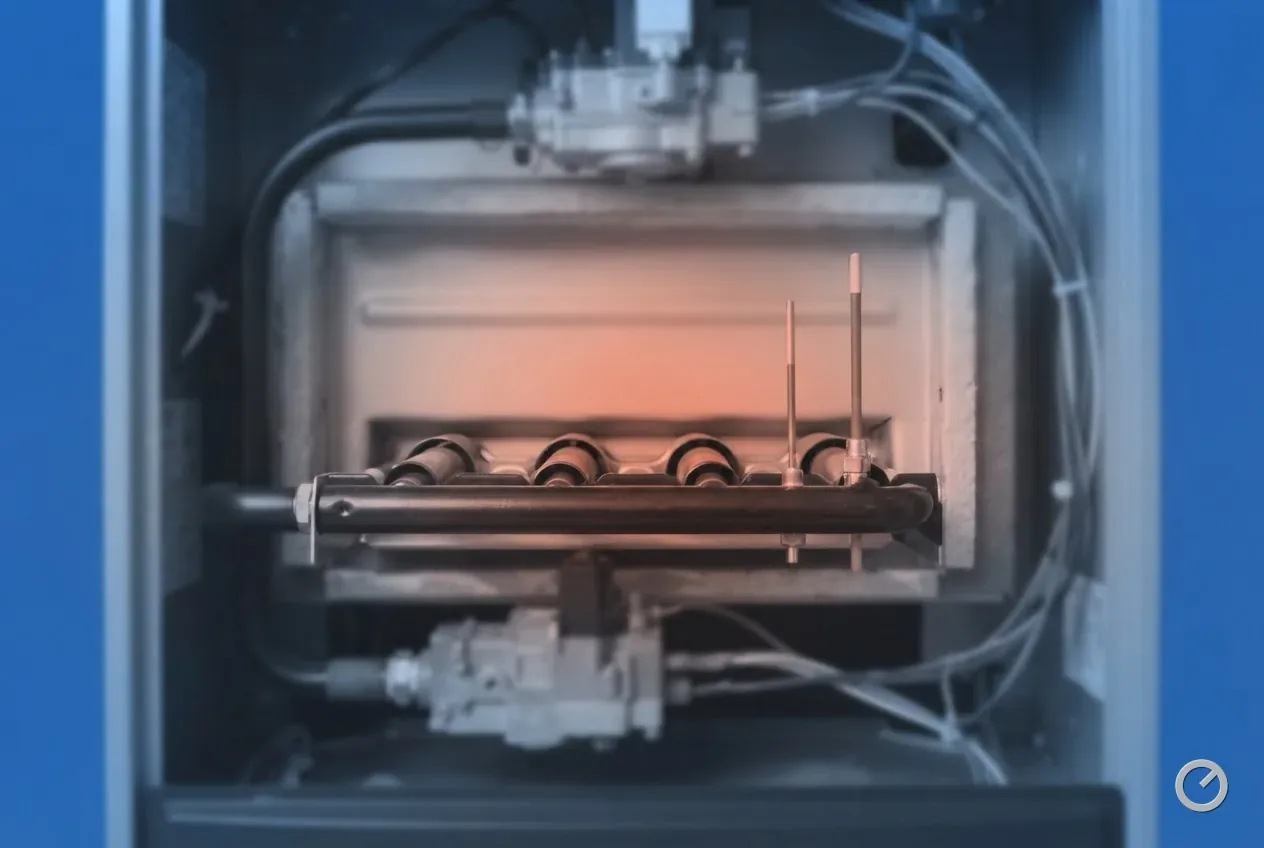
Thermal-toned flame sensor beside a burner
The flame sensor sits in the flame; a film on it reads as no flame at all.

The flame-sensor version has a signature: the burners light, run for five to ten seconds, then shut off, and the furnace tries again two or three times before locking out. That sequence is almost diagnostic on its own.

Short cycling

A furnace that runs for two or three minutes and shuts off is usually tripping the high limit, which means it is making more heat than the airflow can carry away. Restricted filter, closed registers, an undersized return, or a furnace oversized for the house so badly that no reasonable airflow could keep the rise in range.
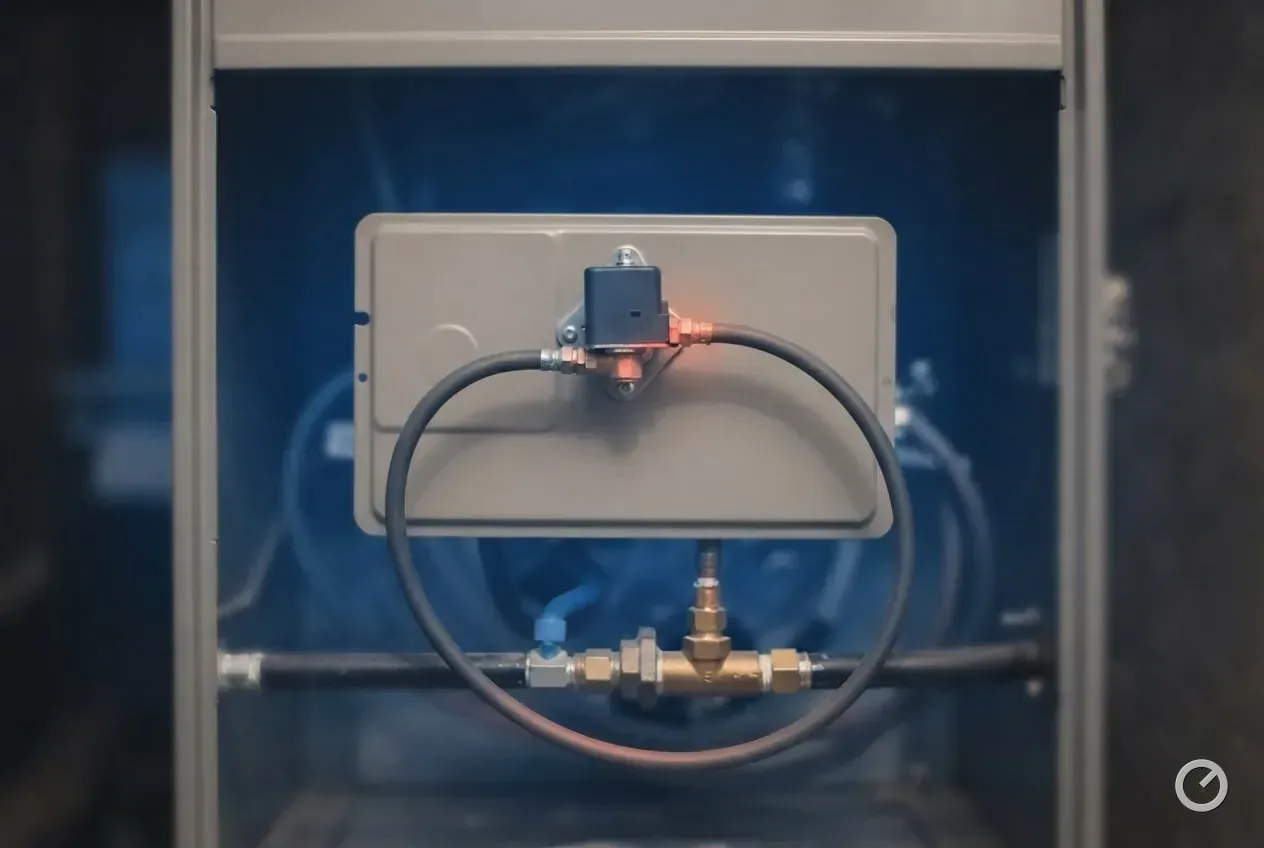
Thermal-toned furnace pressure switch and hose
Pressure switch and hose: a cracked hose or a wet trap stops the sequence before ignition.

The order to check: filter, then registers, then static pressure, then the sizing. A correctly sized 80% or 95% furnace on adequate duct should run twenty minutes or more on a cold morning. If yours never does, the furnace size calculator will tell you whether the box was ever the right size.

Sources: 10 CFR 430.32(e)(1)(iii)(A) (read 2026-09-04)

More in Heating 5 guides