What you can do yourself
- Check the filter monthly. Hold it to a light. When you cannot see through it, that is your interval — see the interval guide.
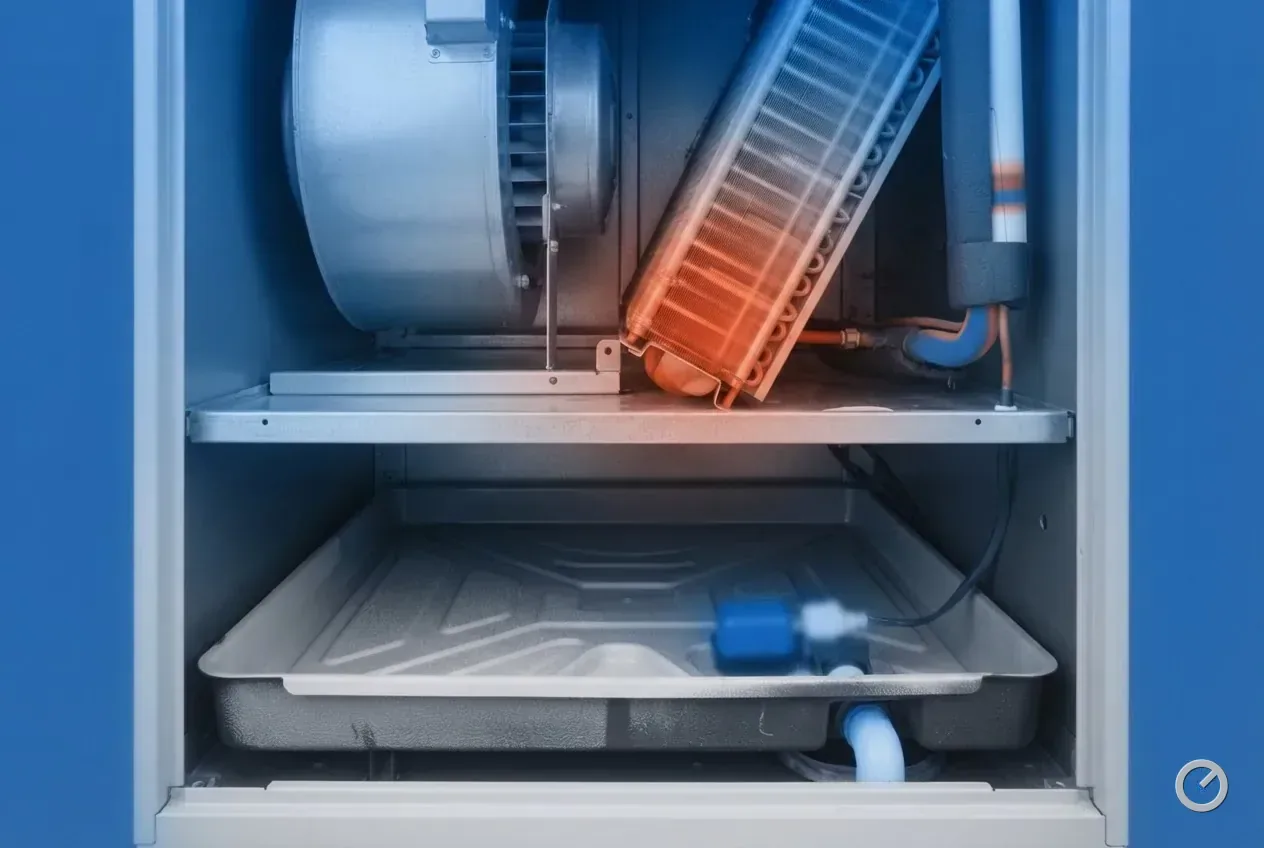
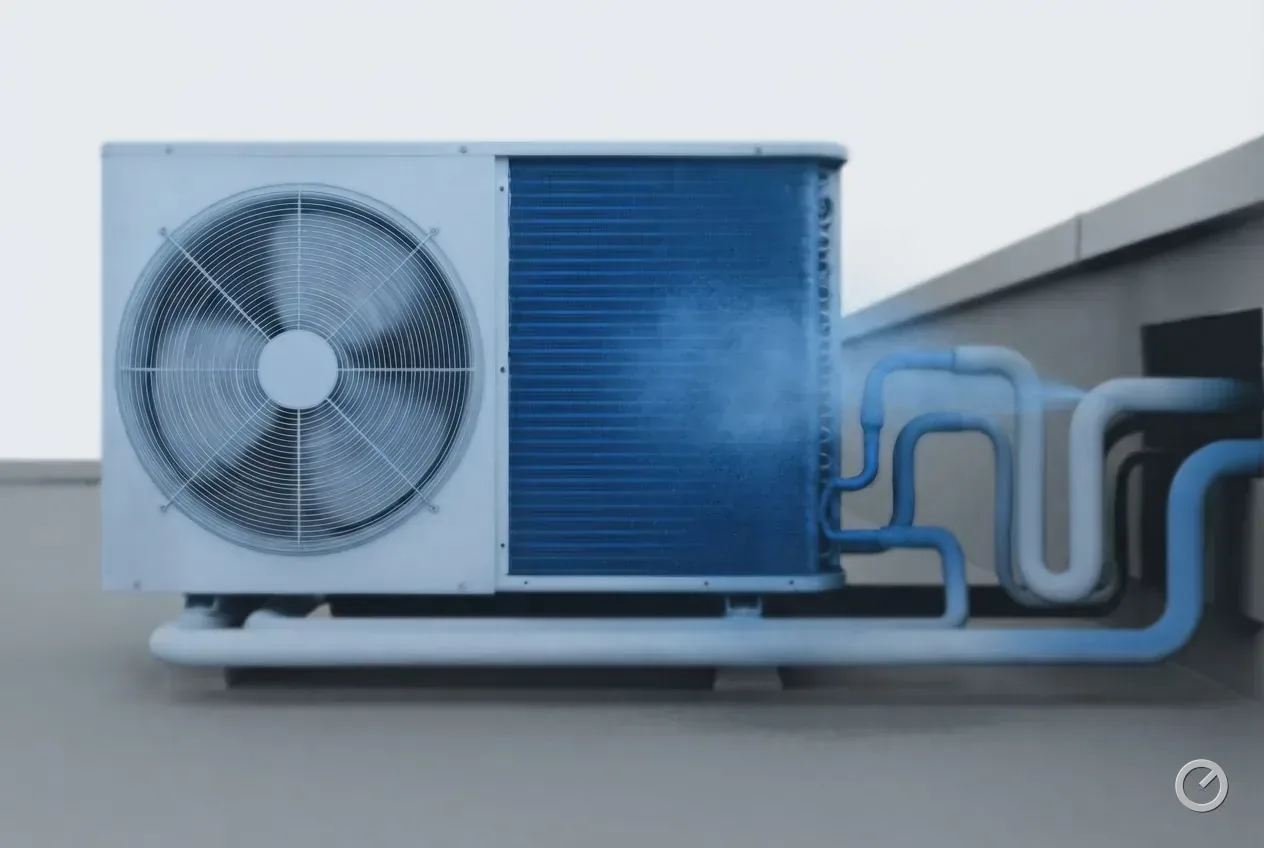
- Keep the condenser clear. Two feet on all sides, nothing growing into it, no bin leaning against it. Rinse the coil once a year from the inside out with the power off.
- Pour a cup of water down the condensate line at the start of the cooling season and confirm it comes out where it should.
- Keep supply registers open. Closing registers to "save money" raises static pressure and costs capacity everywhere else.
- Test the CO alarms. Monthly button test, replacement on the date printed on the back.
What the professional visit is for
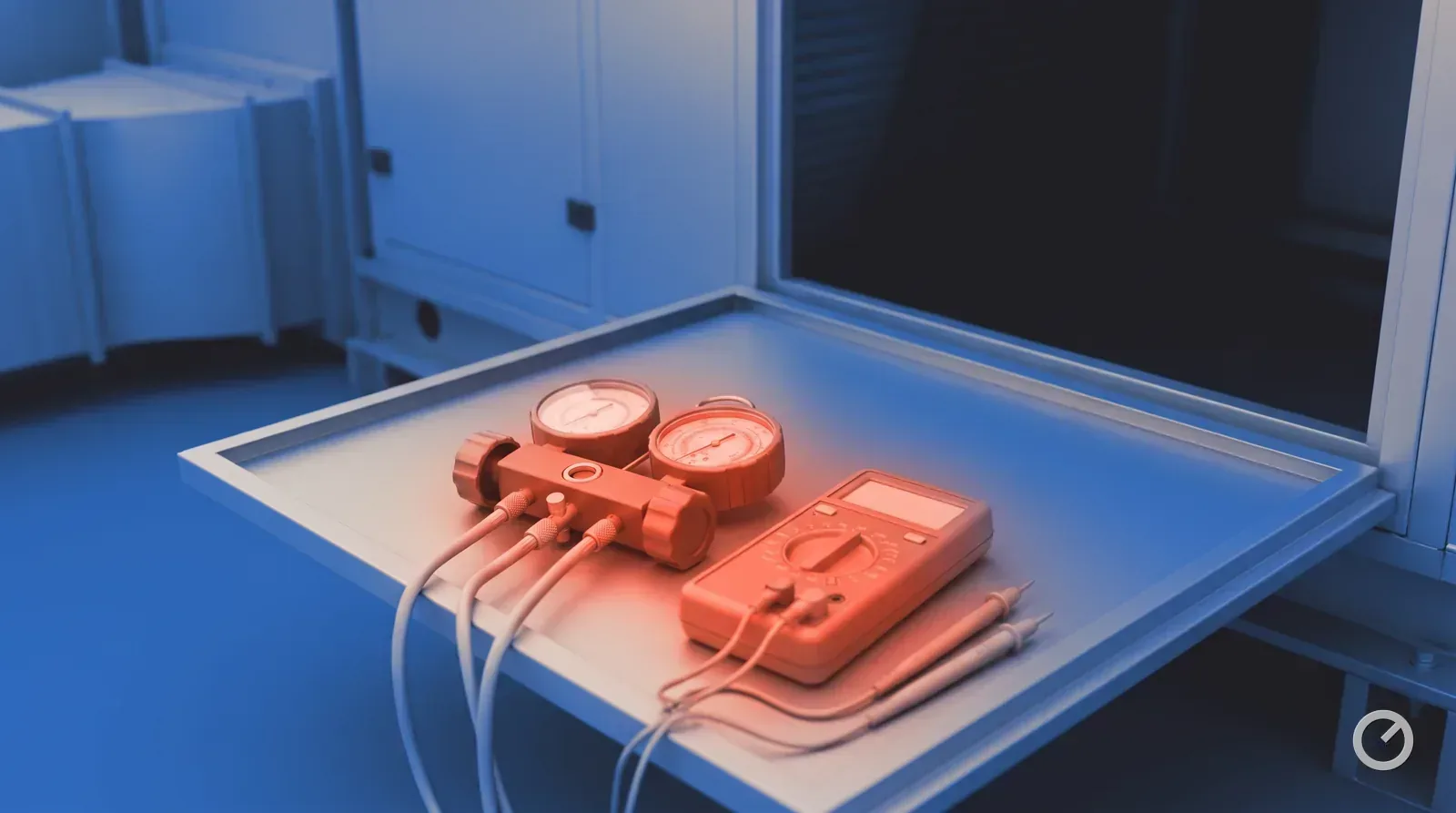
Everything that needs a gauge, a meter or a panel off. Combustion analysis and heat exchanger inspection on the heating visit; refrigerant circuit, electrical and airflow on the cooling visit. Both visits should start with static pressure and end with a written set of readings.
The printable checklist has the twelve tasks per season with a box beside each reading. Print it and hand it over at the start of the visit; a competent technician will not mind.
The readings that matter
| Reading | Season | Why it is worth keeping |
|---|---|---|
| Total external static pressure | Both | Trends upward as the duct and filter regime degrade |
| Temperature split or rise | Both | Airflow and capacity in one number |
| Superheat and subcooling | Cooling | Charge, and whether it is drifting year to year |
| Compressor and fan amps | Cooling | Rising draw is a bearing or a coil, months early |
| Capacitor microfarads | Cooling | Predicts the most common summer failure |
| Manifold gas pressure | Heating | Overfiring shortens exchanger life |
| Carbon monoxide | Heating | Safety, and an early warning of combustion drift |
| Filter size and MERV | Both | So the next person buys the right one |
Ask for the numbers, not the sticker
A tune-up that produces only a sticker on the cabinet has told you nothing. Three years of static pressure readings on one system will show a problem developing long before anyone in the house notices it.
Maintenance agreements
A maintenance agreement usually bundles two visits, a discount on repairs and priority scheduling in a heat wave. The two visits are the substance; the priority scheduling is worth more than people expect in July, and the repair discount is worth whatever the shop's rates were before the discount.
Read what the visits include. If the scope is "inspect and clean" with no listed measurements, you are buying two filter changes. If it lists readings and provides a copy, you are buying maintenance.
Is it worth it
Honestly: the cooling visit pays for itself more reliably than the heating visit does. A dirty condenser, a weak capacitor and a slow charge loss are all common, all caught by the spring visit, and all cheaper to fix before August. The fall visit is mostly a safety inspection — which is exactly why it is not optional on a combustion appliance.
What does not pay for itself is a "tune-up" that ends in a sales pitch for equipment. If every visit produces a recommendation to replace, and never a set of readings, change companies. And anything involving the refrigerant circuit belongs to someone certified: section 608 of the Clean Air Act (40 CFR part 82, subpart F) bans intentional venting of ODS refrigerants and their substitutes, including HFCs, during service, repair or disposal.
Sources: US EPA, Indoor Air Quality — What is a MERV rating? (read 2026-09-04) · US EPA, Stationary Refrigeration and Air Conditioning (read 2026-09-04)