Why it changed
EPA's Technology Transitions programme under the AIM Act sets limits on the use of hydrofluorocarbons in specific sectors, including refrigeration, air conditioning and heat pumps. R-410A has a high global warming potential; R-454B and R-32 are substantially lower, and manufacturers moved new residential equipment onto them. The hvac brands comparison shows which manufacturer family chose which.
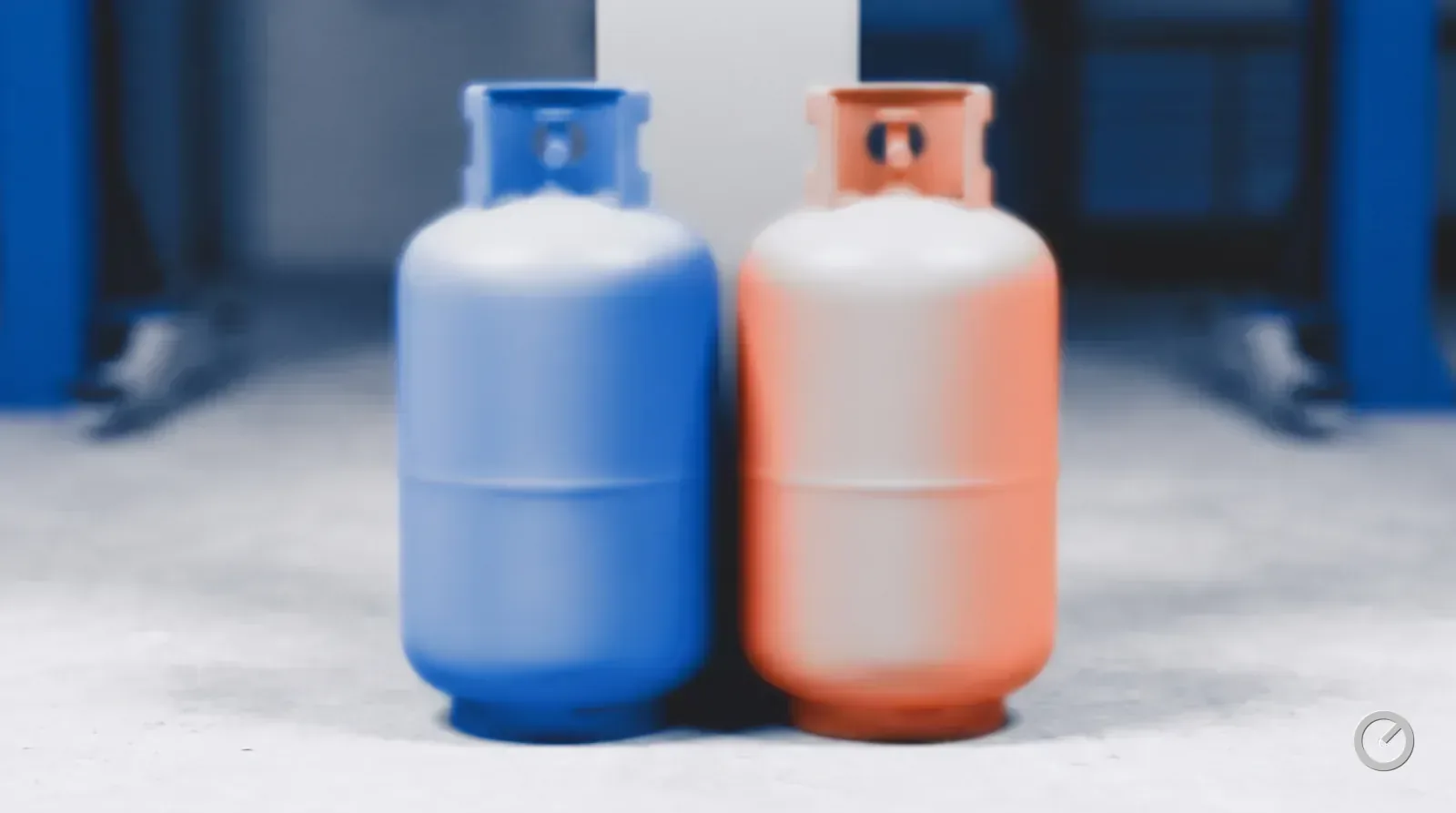
Separately, EPA published its final Emissions Reduction and Reclamation rule on 2024-10-11, which tightens how HFCs and their substitutes are managed, recovered and reclaimed. Between them, the two rules are why the cylinders on the truck changed colour.
What A2L means on a job
A2L is an ASHRAE safety classification: lower toxicity, mildly flammable. It is not propane. Ignition needs a sustained energy source and a concentration inside a narrow band, which is why the charge limits and detection requirements in the equipment standards exist rather than a ban.
Safety — What changes in the van and on the roof
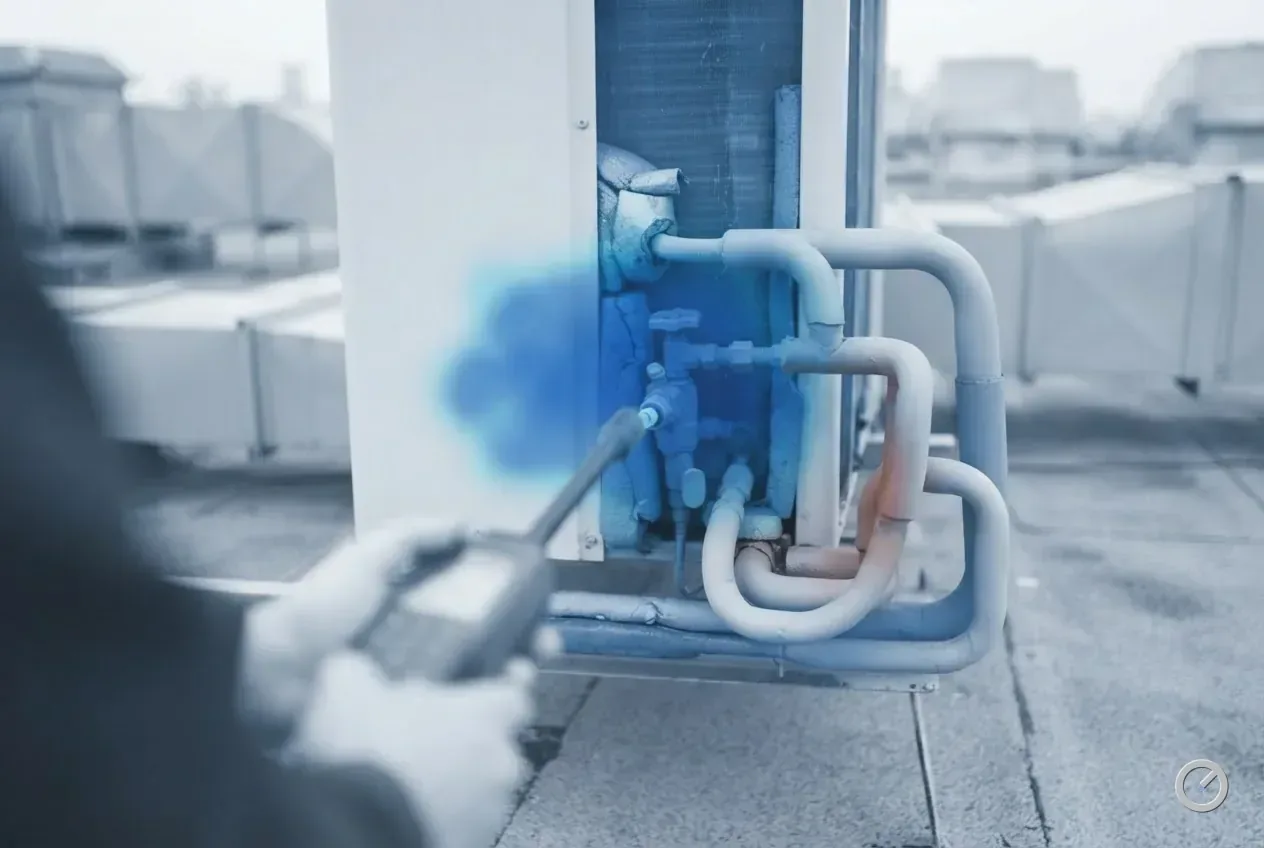
A2L-rated recovery machines, gauges and vacuum pumps. No open flame near a charged system. Ventilation when working in confined spaces. Cylinder storage and transport per the A2L rules. And leak detection built into the indoor equipment, which must be left functional — it is not an inconvenience to be bypassed.
Section 608 of the Clean Air Act (40 CFR part 82, subpart F) bans intentional venting of ODS refrigerants and their substitutes, including HFCs, during service, repair or disposal
What is different in the equipment
| Item | R-410A | R-454B |
|---|---|---|
| Safety class | A1 — non-flammable | A2L — mildly flammable |
| Indoor leak detection | None | Built into the air handler or coil |
| Service equipment | Standard | A2L-rated recovery, gauges, pump |
| Glide | Near-azeotropic, small glide | Zeotropic with real glide — charge as liquid |
| Charging | By subcooling on a TXV | Same method, different P–T table |
| Cylinder | Standard valve | Left-hand thread, A2L labelling |
The glide matters at the manifold: R-454B is a blend whose components boil at slightly different temperatures, so it must be charged as a liquid and its saturation temperatures read from its own table, not R-410A's. The superheat and subcooling calculator carries both curves.
If you already own R-410A
Nothing about your system changes. R-410A remains legal to service, and reclaimed R-410A will be available for years. What changes is price and, over time, availability of virgin refrigerant, so a system with a chronic leak becomes more expensive to keep alive each season.
R-454B is not a drop-in
You cannot put R-454B into an R-410A system. The oils differ, the operating pressures differ, and the equipment has no leak detection or A2L-rated components. Anyone offering to "convert" your system is describing something that does not exist.
Repair or replace
The transition tilts the maths on older equipment. A fifteen-year-old R-410A condenser with a leaking coil now sits in a market where the replacement coil is scarcer and the refrigerant dearer. Replacing the outdoor unit alone is also awkward: a new A2L condenser needs a matched A2L indoor coil, so the "just swap the condenser" option that used to exist has mostly closed.
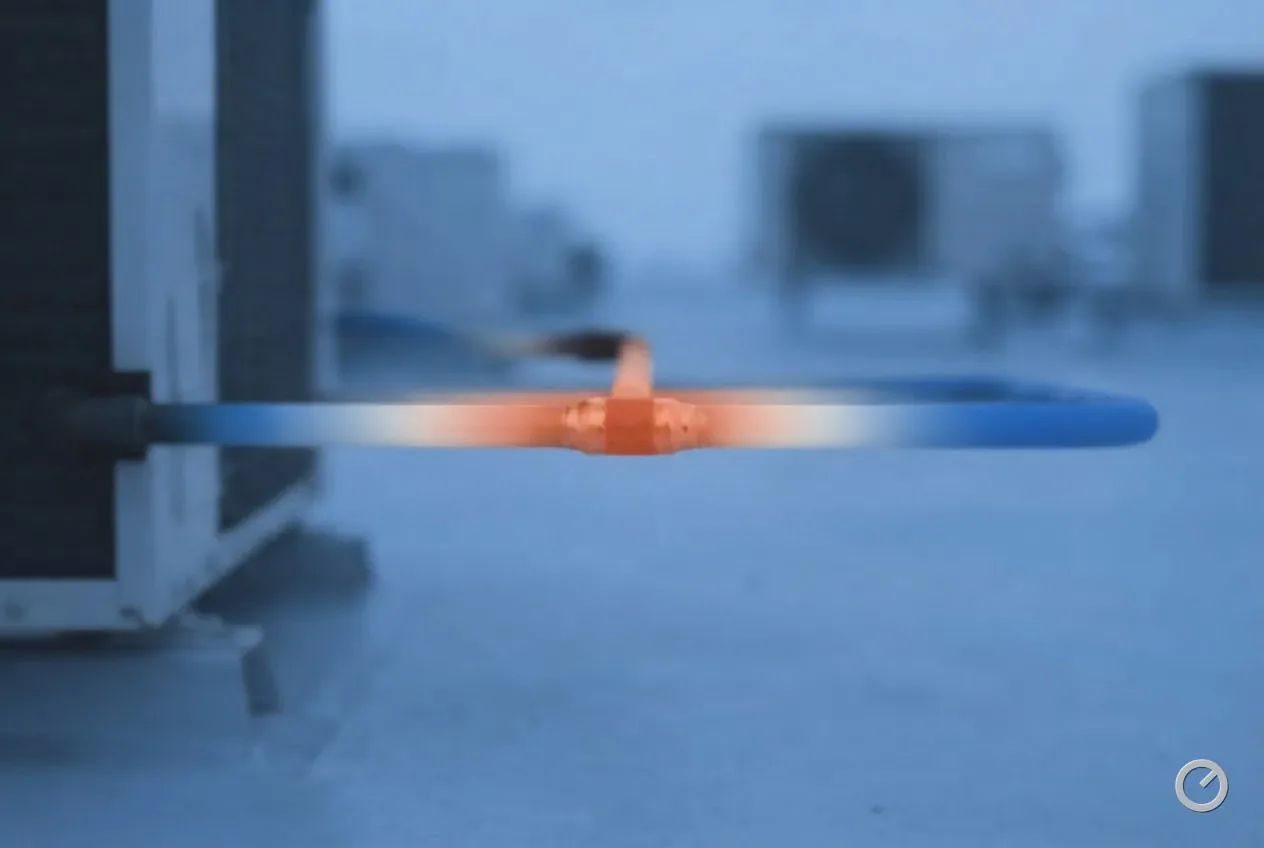
Line sets are the other question. Existing copper can often be reused for an A2L system if it is the right size, pressure-rated and properly flushed or replaced per the manufacturer's instructions — but "often" is doing work in that sentence, and the instructions govern. Get the answer in writing before the quote is signed; the replacement cost calculator has a line for it either way.
Sources: US EPA, Technology Transitions (page last updated 2025-12-03) (read 2026-09-04) · US EPA, Stationary Refrigeration and Air Conditioning (read 2026-09-04)